
What's in this market read
- What “FHA-approved lender” actually means
- Why the FHA insures loans instead of making them
- What direct endorsement authority lets an approved lender do
- The four kinds of FHA-approved lender
- How to verify a lender is genuinely FHA-approved
- Banks, credit unions, online lenders, and brokers: who actually offers FHA loans
- Direct lender versus correspondent lender versus mortgage broker
- Lender overlays: why FHA-approved does not mean identical requirements
- Questions worth asking an FHA-approved lender before you apply
- How FHA-approved lenders apply your county’s loan limit
- The lender’s role in the FHA appraisal
- Shopping several FHA-approved lenders without hurting your credit
- Comparing loan estimates from more than one FHA-approved lender
- Red flags when a lender claims to specialize in FHA loans
- FHA-approved condos: a separate approval from the lender’s own
- What to do if your condo or lender is not approved
- The application flow with an FHA-approved lender, step by step
- What makes up an FHA-approved lender’s closing costs
- Common mistakes when choosing an FHA-approved lender
- A worked example: three FHA-approved lenders, one loan
- An FHA-approved lender checklist
- The bottom line
Short answer: An FHA-approved lender is a bank, credit union, or mortgage company that HUD has vetted and authorized to originate loans the Federal Housing Administration insures. The approval is granted to the lender, not to you, and it sets a floor of eligibility rather than a fixed rate or requirement. Verify a lender on HUD's own list, then shop rate, fees, and overlay across more than one, since FHA-approved lenders are not interchangeable on terms.
Search for an FHA loan and the phrase FHA-approved lender appears constantly, usually without anyone explaining what the approval actually covers. It is not a marketing flourish and it is not optional: without it, a lender cannot originate a loan the Federal Housing Administration will insure, full stop. But the approval answers a narrower question than most buyers assume. It tells you the lender is allowed to write FHA loans. It says nothing about the rate you will be quoted, the credit score that lender will actually accept, or how quickly your file will move, because those are set by the individual lender on top of the program’s floor.
This market read takes the label apart in full: what HUD approval and direct endorsement authority actually let a lender do, the different kinds of institution that hold it, how to verify one yourself rather than trusting a badge on a website, and why lender overlays mean two FHA-approved lenders can hand back very different terms on the identical file. It covers the difference between a direct lender, a correspondent lender, and a mortgage broker, how shopping several FHA-approved lenders actually affects your credit, the separate approval a condo project needs regardless of your lender’s status, and the closing-cost differences a genuine comparison can turn up. For the program’s own requirements, credit tiers, and mortgage insurance, our FHA loan explainer covers that ground directly, and this market read pairs with it rather than repeating it. Run your own numbers through the companion calculator as you read to see what a rate or fee difference between two lenders is actually worth.
Key takeaways
- FHA approval is granted to the lender by HUD. It means the lender may originate FHA-insured loans, not that every FHA-approved lender offers the same rate, fee, or credit requirement.
- Most FHA-approved lenders hold direct endorsement authority, letting them underwrite and close without HUD reviewing every file, which is what keeps an FHA loan on a normal closing timeline.
- Banks, credit unions, online lenders, and mortgage companies can all be FHA-approved. What differs between them is the lender overlay, the service model, and often the fee, not eligibility itself.
- Verify approval on HUD's own lender list rather than a website badge, and separately confirm any condo project against HUD's own condo approval list before you get attached to a unit.
- Shopping more than one FHA-approved lender inside a short window is generally treated as one credit event, and a real comparison of rate, fees, and overlay is where the actual savings sit.
What “FHA-approved lender” actually means
Strip the phrase down and it describes one specific fact: HUD has reviewed this lender and authorized it to originate mortgages the Federal Housing Administration will insure. That is the entire content of the approval. It is not a rating of how good the lender is, not a promise of a particular rate, and not a guarantee that this lender will approve your file. It is closer to a license than a recommendation, the same way a contractor’s license confirms they are legally allowed to do the work without telling you whether they are the right one for your job.
The approval exists because the FHA insures the loan against your default, and an insurer is naturally selective about who it lets originate insured products. HUD checks a lender’s financial standing, its staffing and quality-control processes, and its compliance history before granting approval, and it can suspend or revoke that approval from a lender that originates loans carelessly. Every FHA loan you have ever heard of came from a lender that cleared this bar first, which is why the label matters at all, even though it answers a narrower question than most buyers assume when they hear it.
Why the FHA insures loans instead of making them
It is worth being precise about what the government does and does not do here, because the confusion runs both directions. The Federal Housing Administration does not lend you money. An FHA-approved lender does, using its own funds or funds it has access to, and the FHA insures that lender against loss if you default. That structure is the entire reason an FHA-approved lender can accept a smaller down payment and a lower credit score than it would on its own risk: the federal backstop absorbs some of the downside, so the lender can extend easier terms without taking on the full risk itself.

This is why the approval sits on the lender rather than on the loan program in the abstract. HUD is not simply publishing a rulebook and trusting anyone to follow it; it is authorizing specific, vetted institutions to act on its behalf when they originate an insured loan. An uninsured lender cannot decide on its own to start offering FHA loans, no matter how closely it copies the program’s rules, because the insurance itself only attaches when an approved lender originates the file.
What direct endorsement authority lets an approved lender do
Most FHA-approved lenders also carry a second, related authorization called direct endorsement. Without it, HUD itself would need to review and approve every individual loan file before it could close, which would make FHA lending painfully slow. Direct endorsement authority lets an approved lender underwrite the loan, make the final credit decision, and close it without sending the file to HUD first, subject to the lender following FHA’s underwriting guidelines and standing behind its own decisions if it gets one wrong.
The practical effect is speed. A direct endorsement lender’s FHA loan closes on roughly the same timeline as a conventional one, since the government is not a bottleneck in the middle of the process. HUD still audits direct endorsement lenders after the fact, reviewing samples of closed loans for compliance, and can pull the authority from a lender whose files repeatedly fail that review. So the authority is a privilege that comes with ongoing accountability, not a one-time credential a lender earns and forgets. When you hear a lender describe itself as a direct endorsement FHA lender, that is what the phrase is pointing at: it closes its own FHA files rather than waiting on a federal reviewer.
The four kinds of FHA-approved lender
HUD’s own program recognizes a handful of categories of approved mortgagee, and knowing the shape of them helps make sense of why lenders describe themselves differently. A supervised mortgagee is typically a bank or credit union that is already regulated by a federal or state banking authority, which HUD treats as a form of built-in oversight. A nonsupervised mortgagee is a mortgage company that specializes in lending but is not a depository institution, so it answers to HUD’s own oversight more directly rather than to bank regulators. An investing mortgagee purchases and holds FHA-insured loans as an investment rather than necessarily originating them at the retail level. A loan correspondent originates and closes FHA loans but does so under a sponsoring lender’s direct endorsement authority rather than its own, then sells the loan on.
None of these categories changes what the loan looks like to you as a borrower. All four can deliver a genuine FHA-insured mortgage, and the category mostly describes the lender’s internal structure and its relationship to HUD rather than anything you would notice in your own file. What is worth remembering is that a loan correspondent operates under someone else’s direct endorsement authority, which is one reason a smaller originator can still offer a fully compliant FHA loan without holding every authorization itself.
How to verify a lender is genuinely FHA-approved
Do not take FHA approval on faith from a website badge, a business card, or a loan officer’s say-so, because none of those carry any weight if it turns out to be wrong partway through your file. HUD publishes its own searchable lender list, and it is the only source worth trusting over a lender’s marketing. Search it by the lender’s legal name or by your location, and confirm the entry shows an active status rather than a lapsed or historical one, since approvals can be suspended or surrendered.
Two practical notes make the lookup more useful. First, search by the lender’s exact legal name rather than a marketing brand, since a company can operate under a consumer-facing name that differs from the name HUD has on file. Second, if a lender hesitates to confirm its own approval status directly or cannot explain what direct endorsement authority means, treat that as a reason to keep shopping rather than a minor gap, since a genuinely FHA-approved loan officer works with the terminology daily. This verification takes a few minutes and it is the single step that protects you from wasting weeks on a file that was never eligible for FHA insurance to begin with.
Banks, credit unions, online lenders, and brokers: who actually offers FHA loans
FHA approval is not reserved for one kind of institution, and this surprises buyers who assume it belongs mainly to large national banks. A community bank, a credit union, a large online-only lender, and a smaller regional mortgage company can all hold genuine FHA approval, provided each has cleared HUD’s financial and operational review. What differs between them is not their eligibility to originate FHA loans but everything layered on top of that eligibility: the overlay each applies, how quickly each moves a file, what the service experience looks like, and often the fee structure attached to the loan.

A credit union may offer a more personal process and, for members, occasionally a fee break, but it may also move more slowly on a file that does not fit its typical member profile. A large online lender may process faster with less paperwork friction but hand you off between representatives rather than one point of contact. Neither pattern is universal, and the only way to know which shape fits you is to ask each institution directly how it structures the FHA process rather than assuming from its size or its channel.
Direct lender versus correspondent lender versus mortgage broker
Three roles get confused constantly, and separating them clarifies who you are actually dealing with and whose decision governs your file. A direct lender uses its own funds to close the loan and typically holds direct endorsement authority itself, meaning it underwrites and decides your file in-house. It may keep servicing the loan afterward or sell that servicing right while remaining the party who made the original credit decision.
A correspondent lender also funds the loan at the closing table, using its own line of credit to do so, but sells the loan to a larger investor shortly after closing, often within days or weeks. This is common among smaller banks and credit unions that would rather not carry FHA direct endorsement authority themselves; they lean on a relationship with a larger correspondent investor instead. To you as the borrower, the process looks similar to working with a direct lender, since the same institution takes your application and closes the loan; the difference shows up afterward, in who services the loan and whose underwriting guidelines actually governed the approval.
A mortgage broker funds nothing itself. It takes your application and shops it to a panel of FHA-approved wholesale lenders, then places the loan with whichever one offers a fit for your file, earning a fee for the placement. Our broker versus bank comparison covers this trade-off in more depth, but the FHA-specific version of it is straightforward: a broker can shop a wider set of overlays on your behalf in one application, at the cost of an extra party in the chain and, sometimes, a longer path to a final answer.
Lender overlays: why FHA-approved does not mean identical requirements
Here is the single most consequential fact this market read has to convey. HUD sets the FHA program’s floor: the minimum credit score, the minimum down payment, the debt-to-income guidelines, and the mortgage insurance structure. Nothing about FHA approval requires a lender to stop there. A lender is free to require more than the program floor on any of these dimensions, a widespread and entirely legal practice called a lender overlay, and most FHA-approved lenders apply one in some form.
The practical consequence is significant. A borrower with a 580 credit score technically meets the FHA program’s threshold for the 3.5 percent minimum down payment, but a specific lender may set its own internal floor at 620 or 640, declining a file the program itself would allow. That borrower is not disqualified from the FHA program; they are declined by one lender’s overlay and may be approved by another’s. The same logic applies to debt-to-income ratios, reserve requirements, and even property types some lenders decline to finance even though FHA permits them. Treat every FHA lender requirement you read, including in this market read, as the program’s own floor, and confirm each specific lender’s actual overlay before assuming you know where you stand with them.
Questions worth asking an FHA-approved lender before you apply
A short list of direct questions, asked before you submit a full application, saves real time. Ask each lender to confirm its current status on HUD’s list rather than taking a verbal yes at face value. Ask what its own minimum credit score is for the FHA program, since that overlay number, not the program floor, is the one that actually governs your file. Ask whether it holds direct endorsement authority itself or operates as a correspondent under someone else’s, since that shapes who makes the final call on your file. Ask what its typical closing timeline runs for an FHA loan specifically, since FHA files sometimes move on a different internal track than conventional ones inside the same shop.
Ask for a written loan estimate rather than a verbal rate quote, since only the written document is directly comparable across lenders on rate, fees, and terms together. And ask directly whether it originates loans for the specific property type you are considering, a condo, a manufactured home, or a two-to-four unit building, since some lenders decline certain property types even within the FHA program. None of these questions requires a hard credit pull to answer, so ask them before you commit to a formal application with any one lender.
How FHA-approved lenders apply your county’s loan limit
Every FHA-approved lender, regardless of type, has to apply the same county-by-county FHA loan limit HUD publishes and updates annually, and this is one area where the approval genuinely does standardize behavior rather than leave room for an overlay. The limit caps how large a loan the FHA will insure for a given county and unit count, and no FHA-approved lender can insure a loan above that ceiling regardless of its own risk appetite, since the insurance itself will not attach above the line.
Where lenders differ is in how they communicate the limit and how closely they watch it on your behalf. A lender experienced with FHA financing in a high-cost county will flag early if your target price sits near or above the local ceiling and walk you through the options, increasing the down payment, adjusting the price, or considering a conventional loan instead. A lender that rarely originates FHA loans in that market may catch the issue later in the process, costing you time. Our FHA loan explainer covers how the limit itself is calculated and how to look up your own county’s figure on HUD’s site; this market read is about which lender is going to walk you through applying it well.
The lender’s role in the FHA appraisal
Because the FHA insures the loan against the property as well as the borrower, every FHA loan requires an FHA appraisal, and the lender orders it from an appraiser on an FHA-approved roster rather than choosing any appraiser at will. The appraisal does two jobs at once: it establishes the home’s value, the way any appraisal does, and it checks the property against FHA’s minimum property standards for safety, security, and soundness.
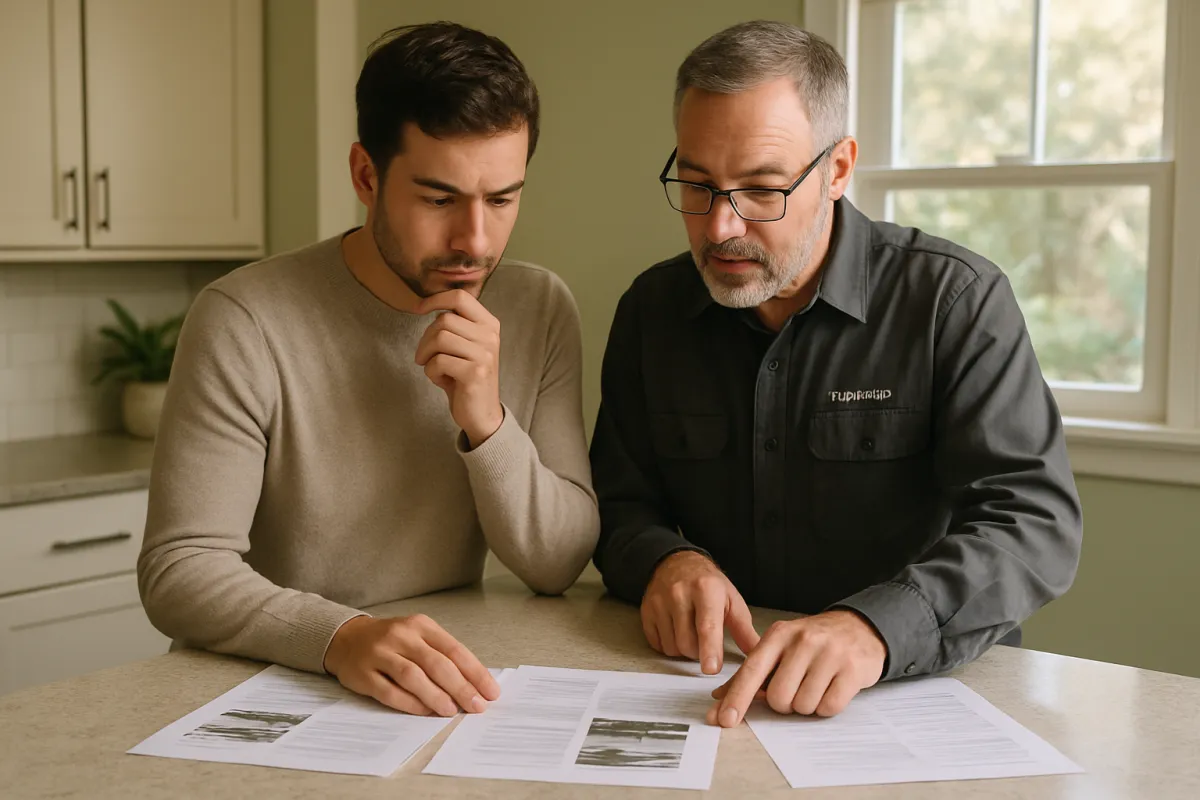
Lenders differ noticeably in how they handle a flagged property issue. Some have in-house staff experienced at working through a minor repair requirement quickly, coordinating with the seller and the appraiser to clear it before closing. Others treat any flagged item as a reason to pause the file for weeks while paperwork circulates. If you are eyeing an older home or one that might have a condition issue, an FHA-approved lender’s experience handling appraisal repair conditions is worth asking about directly, since it can be the difference between a closing that slips a week and one that slips two months.
Shopping several FHA-approved lenders without hurting your credit
The instinct to apply with only one FHA-approved lender, out of convenience or a worry about credit damage, usually costs more than it saves. Rate, fees, and overlay genuinely differ between lenders even within the same insured program, and a small difference in rate compounds into real money across a thirty-year loan. The credit concern is real but overstated: a hard inquiry from each lender is a modest, temporary factor in most scoring models, and those models are generally built to treat several mortgage inquiries made within a short window as one shopping event rather than several separate applications.
Illustrative closing cost quotes from three FHA-approved lenders on the same $320,000 loan
Same borrower, same property, same loan amount. Only the lender changes.
Illustrative quotes on an identical loan. The spread between the highest and lowest here is about $2,600, before any difference in the quoted rate is even considered. Get a written loan estimate from each lender to compare figures like these directly.
Confirm the current length of the deduplication window with a lender or the scoring model rather than assuming a number, and cluster your applications inside one focused stretch to take advantage of it. Two to four FHA-approved lenders is usually enough to reveal the real spread in rate, fees, and overlay without turning the comparison into a second job.
Comparing loan estimates from more than one FHA-approved lender
A verbal quote is not a comparison; a written loan estimate is. Every mortgage lender, FHA-approved ones included, is required to provide a standardized loan estimate that lays out the rate, the fees, and the loan terms in the same format regardless of who issues it, which is exactly what makes an apples-to-apples comparison possible. Request one from each lender you are seriously considering, and read them line by line rather than reacting to whichever lender advertised the lowest headline rate.
A lower rate paired with higher upfront fees is not automatically the better deal, and the reverse is just as common. The comparison that actually matters is the total cost over the period you expect to hold the loan, not the interest rate in isolation, which is exactly what the companion calculator attached to this market read works out once you enter two lenders’ quoted rates and fees. Our closing cost breakdown separates which lines on a loan estimate are truly lender-specific and which are largely fixed regardless of who you choose.
Red flags when a lender claims to specialize in FHA loans
Most lenders who describe themselves as FHA specialists are exactly that, and specialization is a genuine advantage: an experienced FHA loan officer moves a file faster and anticipates appraisal issues before they stall a closing. But a few patterns are worth treating with caution regardless of how confidently a lender presents them. Be wary of a lender that cannot immediately confirm its own HUD approval status or explain what direct endorsement authority means, since genuine specialists work with both terms daily.
Be equally cautious of pressure to lock in quickly before you have seen a written loan estimate, of a refusal to put a quoted rate or fee in writing, and of any suggestion that a specific FHA-approved lender can guarantee approval before reviewing your actual documents. FHA approval is a real, verifiable status, and a legitimate lender treats questions about it as routine rather than as an inconvenience. Our bad-credit buying walkthrough covers a related pattern worth recognizing, since buyers stretching to qualify are also the ones most often targeted by pressure tactics.
FHA-approved condos: a separate approval from the lender’s own
This is the detail that trips up more buyers than any other part of the FHA-approved lender question, so it deserves its own section rather than a passing mention. A lender’s FHA approval and a condominium project’s FHA approval are entirely separate reviews, conducted by HUD independently of each other. HUD maintains its own list of condo projects it has approved for FHA financing, covering the building’s budget, insurance, owner-occupancy ratio, and a handful of other project-level criteria, none of which has anything to do with your personal finances or your chosen lender.
A fully FHA-approved lender, holding direct endorsement authority and a clean HUD record, still cannot close an FHA loan on a unit inside a condo project that has never applied for that separate approval, or whose prior approval has lapsed and not been renewed. Our condo buying walkthrough covers the wider condo purchase process, but the FHA-specific step is simple: ask your lender to check the specific project against HUD’s condo approval list before you get emotionally attached to a unit, since finding out after an offer is accepted is a common and avoidable disappointment.
What to do if your condo or lender is not approved
If the project comes back unapproved, a few paths remain, and none of them require abandoning the building outright. Some condo associations are willing to apply for HUD approval if enough buyers or the association itself pushes for it, though the process takes time and is entirely the association’s decision, not yours or your lender’s. A conventional loan, which does not require the same project-level FHA approval, may still be usable on the same unit if you or a co-borrower can qualify for one. And in some cases a limited FHA condo review process exists for individual units inside a larger unapproved project, though eligibility and availability vary and a knowledgeable FHA-approved lender is the right party to ask about it.
If instead it is the lender that turns out not to be approved, or that declines your file on an overlay basis, the fix is more direct: take your documentation to a different, verified FHA-approved lender rather than assuming the program itself has ruled you out. A decline from one lender’s overlay is not a decision by HUD or by the FHA program, and it is common enough that shopping a second and third lender is standard practice rather than a sign anything is wrong with your file.
The application flow with an FHA-approved lender, step by step
Once you have verified a lender’s approval and gathered a written estimate you are comfortable with, the process runs much like any mortgage application, with the FHA-specific checkpoints layered in at predictable points. You submit your documentation, income, assets, and identification, the same three groups our pre-approval market note covers in full, and the lender’s underwriting team, using its own direct endorsement authority or that of its sponsor, reviews the file against FHA guidelines and its own overlay together.
The lender orders the FHA appraisal from a roster appraiser once you are under contract on a specific property, and any flagged repair items move through negotiation with the seller before the file can proceed to closing. Because the lender is applying both the program’s rules and its own on top of them, staying responsive to document requests matters just as much here as with any other loan type, and a lender experienced with FHA specifically tends to anticipate the appraisal and condo-approval checkpoints rather than being surprised by them partway through.

What makes up an FHA-approved lender’s closing costs
Closing costs on an FHA loan cluster into a handful of categories, and seeing the typical shares helps you judge whether a given lender’s quote is reasonable. Lender fees, origination, underwriting, and processing charges the lender itself sets, sit alongside third-party charges like title work and recording fees that barely move between lenders, and government-related costs including the FHA’s own upfront mortgage insurance premium, which our FHA loan explainer prices out in full. Prepaid items, the first installments of taxes and insurance placed into escrow, round out the total.
What typically makes up FHA closing costs, illustrative shares
Illustrative composition on a typical FHA purchase. Yours will vary by lender, property, and locality.
Only the lender-fees slice and, to a lesser extent, the title slice are genuinely negotiable between lenders. The upfront MIP is set by the FHA program itself, and prepaids depend on your closing date and local tax schedule rather than your lender choice.
The lesson in that split is where shopping actually pays off. The lender-fees slice is the one that meaningfully differs between an FHA-approved lender charging efficiently and one padding its own margin, and it is the slice a genuine loan-estimate comparison exposes. The upfront MIP is fixed by the program regardless of lender, and prepaids depend mostly on your closing date and local tax schedule, so do not expect either of those lines to move much from one written estimate to the next.
Common mistakes when choosing an FHA-approved lender
A handful of errors account for most of the regret buyers report after the fact.
- Applying with only one lender. Skipping the comparison leaves the rate, fee, and overlay spread on the table, and over a thirty-year loan that spread is real money.
- Trusting a verbal rate quote. Only a written loan estimate is directly comparable across lenders; a spoken number can quietly change by closing.
- Assuming FHA approval means identical requirements everywhere. The program floor and a given lender’s overlay are different numbers, and the overlay is the one that actually decides your file.
- Skipping the condo approval check. A fully FHA-approved lender still cannot close on a condo project that was never separately approved by HUD.
- Not asking about direct endorsement or correspondent status. Knowing who actually makes the underwriting call on your file sets expectations for the timeline and who to call with questions.
- Avoiding a second application to protect credit. The deduplication window exists precisely so shopping costs little, and not using it is the more expensive mistake.
Each mistake comes from treating “FHA-approved” as the end of the research rather than the starting eligibility check it actually is.
A worked example: three FHA-approved lenders, one loan
Put numbers to the comparison, because the abstract argument for shopping becomes concrete once you see it run. An illustrative borrower is financing a $320,000 loan, having verified all three candidate lenders on HUD’s own list first. Lender A quotes a rate of 6.75 percent and closing costs of about $8,800. Lender B, a larger national name with a heavily advertised rate, quotes 6.5 percent but with closing costs near $9,800. Lender C, a smaller correspondent lender operating under a sponsor’s direct endorsement authority, quotes 6.85 percent with closing costs around $7,200.
On principal and interest alone, Lender B’s lower rate saves roughly $37 a month against Lender A and about $47 a month against Lender C on this loan amount. But Lender B’s closing costs run $1,000 to $2,600 higher than the other two, so the monthly savings needs time to catch up to the higher upfront cost, and over a shorter hold, Lender C’s lower fees can leave the borrower ahead in total cost even at the highest quoted rate of the three. Which lender is actually cheapest depends entirely on how long the borrower expects to keep the loan, which is exactly the comparison the companion calculator beside this market read runs once you enter your own three quotes. Every figure here is illustrative and rounded to show the method; your own quotes will differ by lender, market, and the day you lock a rate.
An FHA-approved lender checklist
Before you commit to any one FHA-approved lender, work through this sequence in order.
- Verify approval directly. Search HUD’s own lender list by the lender’s exact legal name and confirm an active status.
- Ask about direct endorsement or correspondent status. Know who is actually making the underwriting decision on your file.
- Get the overlay in writing. Ask for the lender’s own minimum credit score and debt-to-income ceiling, not just the FHA program’s floor.
- Request written loan estimates from at least two or three lenders. Cluster the applications inside one short window and compare them line by line.
- Check any condo project separately. Confirm HUD’s own condo approval status before you get attached to a specific unit.
- Ask about appraisal and repair-condition experience. A lender familiar with FHA appraisals handles a flagged repair item far faster than one that rarely sees them.
A buyer who works this list treats FHA approval as the eligibility check it is, then does the comparison shopping that actually decides what the loan costs.
The bottom line
FHA-approved lender is a real, verifiable status, granted by HUD to a bank, credit union, or mortgage company that has met the program’s financial and operational standards, and it is the precondition for any FHA loan closing at all. But it is a floor, not a ranking, and it says nothing about the rate, the fee, the overlay, or the service you will actually get from a given lender. Two genuinely FHA-approved lenders can hand back different letters on the identical file, and the difference between them, not the approval itself, is what your search should actually spend time on.
Verify a lender on HUD’s own list, ask directly about its overlay and its direct endorsement or correspondent status, check any condo project separately from the lender, and gather written loan estimates from more than one lender before you choose. Run the numbers through the companion calculator and read our FHA loan explainer and pre-approval market note alongside this one. Do that, and FHA approval stops being a phrase you take on faith and becomes exactly what it should be: a verified starting point for a real comparison.
Treat this market read as an explainer on what FHA lender approval covers, not as mortgage, lending, or financial advice. Every rate, fee, and dollar figure here is illustrative and rounded to show the method; actual quotes, overlays, and approval statuses are set by individual lenders and HUD, and they change over time and differ by borrower, property, and lender. Verify any lender’s current approval status on HUD’s own site, confirm any condo project’s approval separately, and get written terms from a licensed, FHA-approved lender before you rely on any figure here.
Frequently asked questions
What does FHA-approved lender actually mean?
An FHA-approved lender is a bank, credit union, or mortgage company that HUD has vetted and authorized to originate loans the Federal Housing Administration will insure. Approval is a status granted to the lender, not to you, and it means the lender has met HUD's financial, staffing, and compliance standards well before you ever apply. Most FHA-approved lenders also hold direct endorsement authority, letting them underwrite and close the loan without HUD reviewing every file first, which is what makes an FHA loan close on a normal timeline. The lender still applies FHA's rules, and often its own stricter version of them, to your specific application.
How can I check if a lender is genuinely FHA-approved?
HUD maintains a public, searchable lender list on its own site, and that list is the only source worth trusting over a lender's own marketing. Search it by the lender's name or by location, and confirm the entry is active rather than an old or lapsed approval. A loan officer's business card or a website badge is not verification, since either can be outdated or simply wrong. If a lender hesitates to confirm its own HUD approval status directly, or cannot explain what direct endorsement authority is, treat that as a reason to keep shopping rather than a technicality.
Do all FHA-approved lenders offer the same rate and terms?
No. FHA approval sets a floor of eligibility to originate FHA loans and insures the loan against default; it does not set the rate, the fee, or the exact credit and reserve requirements a given lender demands. Two FHA-approved lenders can quote meaningfully different rates and fees on the identical loan, and one can require a 620 credit score while another accepts 580, a difference called a lender overlay. Treat FHA approval as a pass or fail question about eligibility, then shop rate, fees, and overlay separately, the way our pre-approval market note covers shopping several lenders in one window.
What is the difference between a direct lender, a correspondent lender, and a mortgage broker for an FHA loan?
A direct lender underwrites and funds the loan with its own money and its own direct endorsement authority, and typically services it afterward or sells the servicing rights. A correspondent lender also funds the loan at closing but sells it shortly after to a larger investor, which is common among smaller banks and credit unions that do not carry FHA direct endorsement themselves. A mortgage broker does not fund anything; it shops your file to several FHA-approved wholesale lenders and is paid a fee for the placement. All three can deliver a genuine FHA loan, and the practical differences show up in speed, in who you call with questions, and in whose overlay applies to your file.
Can a bank, a credit union, and an online lender all be FHA-approved?
Yes. FHA approval is not tied to one kind of institution; it is a status any bank, credit union, mortgage company, or online lender can earn by meeting HUD's financial and operational requirements. What differs between them is not eligibility to offer FHA loans but the overlay, the service model, and sometimes the fee structure each applies on top of the program's floor. A community bank, a large national lender, and an online-only originator can all be genuinely FHA-approved and still hand back three different quotes on the same file, which is the entire argument for comparing more than one.
Why did one FHA-approved lender decline me while another approved me?
This is common and it is rarely a sign that something is wrong with your file. HUD sets the FHA program floor, but individual FHA-approved lenders are free to require more, a practice called an overlay, and lenders differ in how they weigh a thin credit file, self-employment income, or a debt-to-income ratio near the program's edge. A decline from one lender is information about that lender's specific overlay and risk appetite, not a verdict on your eligibility for the program itself. Ask the declining lender what specifically drove the decision, fix what is fixable, and take the file to a lender whose overlay is a better match.
Does shopping multiple FHA-approved lenders hurt my credit score?
The cost is small and often overstated. A hard inquiry from each FHA-approved lender is a modest, temporary factor in most scoring models, and those models are generally built to treat several mortgage inquiries made within a short window as one shopping event rather than several separate applications. Confirm the current window with a lender or the scoring model rather than assuming a length, and cluster your applications inside one focused stretch. Our pre-approval market note covers this mechanism in more depth, since it applies to shopping any mortgage lender, not only an FHA one.
If a lender is FHA-approved, does that mean any condo I want automatically qualifies?
No, and this trips up more buyers than any other part of the FHA-approved lender question. The lender's own FHA approval and the condominium project's FHA approval are two separate things entirely. HUD maintains its own list of condo projects approved for FHA financing, and a lender that is fully FHA-approved still cannot close an FHA loan on a condo unit inside a project that has never been through that separate review, or whose approval has lapsed. Ask the lender to check the project against HUD's condo list before you get attached to a specific unit.

Hamza Hai is the editor of AbodeWave. She holds an MBA and reviews the site's articles against our editorial standards, checking that every figure is labelled for what it is, that nothing is presented as verified fact without a source the reader can check, and that the writing stays useful to a non-specialist.