What's in this market read
- What a USDA loan actually is
- The two USDA programs: guaranteed and direct
- Why the program exists and what that explains
- USDA property eligibility: what rural actually means
- How to check a specific address on the eligibility map
- Why so many outer suburbs qualify
- The household income limit and who gets counted
- Adjusted income and the deductions that lower it
- Repayment income versus eligibility income
- A worked example: the USDA income test
- The guarantee fee: upfront and annual
- How the USDA annual fee differs from FHA mortgage insurance
- Occupancy and primary residence rules
- The modest housing standard and what it excludes
- Property condition, the appraisal, and wells and septic systems
- Credit expectations and the automated underwriting threshold
- Manual underwriting and compensating factors
- Debt-to-income ratios and how waivers work
- What USDA loans cannot do
- The two-step approval and your timeline
- A worked example: a USDA loan on a $280,000 home
- USDA versus FHA when you qualify for both
- USDA versus VA and low-down conventional
- Seller concessions, closing costs, and financing above the price
- Common USDA mistakes
- Who a USDA loan is right for
- A USDA readiness checklist
- USDA loans for a first time buyer
- The bottom line
USDA loan requirements come down to a short list that most buyers get wrong in the same two places. They assume rural means farmland, and they assume the income test looks at the people signing the loan. Neither is right. The USDA guaranteed loan is a zero down payment mortgage from an ordinary lender, backed by the U.S. Department of Agriculture, and the two gates that decide whether you can use it are where the house sits on the agency’s eligibility map and how much money the whole household brings in. Plenty of ordinary subdivisions on the outer ring of a metro qualify. Plenty of households with one modest earner do not, because an adult son working part time still counts.
This market read takes the program apart requirement by requirement: the property eligibility map and how loosely rural is actually drawn, the household income cap and who gets swept into it, the deductions that turn gross income into the adjusted figure the USDA compares against, the two-part guarantee fee and why it is not the same animal as FHA mortgage insurance, the occupancy and property condition rules, what lenders expect on credit, and the honest trade against an FHA loan for a buyer who clears both. It sits alongside our market read on FHA loans, our market read on VA loans, and our coverage of zero-down mortgage options, and the affordability calculator will turn any scenario below into a comfortable price range.
Key takeaways
- A USDA guaranteed loan is written by a regular lender and backed by the U.S. Department of Agriculture. That backing is what allows financing of the full purchase price with nothing down.
- Eligible area is decided address by address on the USDA's own lookup, not by whether a place feels rural. A large share of outer suburbs and small towns sit inside eligible territory.
- The income test counts the household, including adults who are not borrowers, and compares an adjusted figure against a limit that varies by county and household size.
- Cost comes as an upfront guarantee fee, commonly financed into the loan, plus an annual fee billed monthly against the loan balance. Both percentages are set by the agency and change.
- The USDA sets no single national credit score floor, but automated approval commonly turns near a score in the 640 neighborhood, and lenders add their own minimums on top.
What a USDA loan actually is
A USDA loan is a home mortgage that the U.S. Department of Agriculture stands behind through its Rural Development arm. The mechanics are the same shape as the other federal programs: an ordinary bank, credit union, or mortgage company puts up the money and services the loan, the agency guarantees the lender against a portion of any loss, and the borrower never sends a payment to the government. What the guarantee buys is the down payment. A lender protected on part of the balance can write a loan for the full appraised value, which is the feature that draws buyers to the program in the first place.
The requirements attached to that benefit follow from the program’s purpose rather than from a lender’s risk appetite. Congress funded rural development, so the house has to sit in an area the agency designates as rural. It funded housing for low and moderate income households, so there is an income ceiling rather than an income floor. It funded homes, not portfolios, so you have to live in the property. Read the requirement list as a set of policy conditions on a subsidy and the fine print stops looking arbitrary.

The two USDA programs: guaranteed and direct
Most of what people mean by a USDA loan is the guaranteed program, known in the agency’s numbering as Section 502 Guaranteed. A private lender originates it, the USDA guarantees it, and the borrower qualifies through that lender. This is the version real estate agents encounter, the version with the widest lender participation, and the version this market read is mostly about.
There is a second program, Section 502 Direct, and it works differently enough that confusing the two produces bad expectations. Under the direct program the USDA itself is the lender, the money comes through a local Rural Development office rather than a bank, and the income targeting is tighter, aimed at low and very low income households rather than the moderate income band the guaranteed program reaches. The direct program can also include a payment subsidy that temporarily reduces the effective interest cost for qualifying households, something the guaranteed program does not offer. Availability, waiting times, and terms differ by area and by the agency’s funding. If a lender tells you they do not do USDA direct loans, they are not being difficult. Almost nobody does, because the agency itself is the lender.
Why the program exists and what that explains
The rural housing programs grew out of a long-standing federal concern that credit was thinner outside metropolitan areas than inside them. Small town banks held fewer mortgages, appraisals were harder to support with comparable sales, and buyers in those markets faced tougher terms than an equivalent household would face in a city. The policy answer was to have the federal government share the risk so ordinary lenders would write loans in places they otherwise underweighted.
That origin explains the shape of every requirement that follows. The area map exists because the subsidy is aimed at particular places. The income cap exists because it is aimed at particular households. The modest housing standard exists because it is aimed at shelter rather than at trophy properties. And the guarantee fee exists because the program is meant to pay for itself out of borrower charges rather than out of an annual appropriation fight. None of that is incidental. Each rule is a boundary drawn around a public purpose, and knowing the purpose makes it far easier to predict how a marginal case will be treated.
USDA property eligibility: what rural actually means
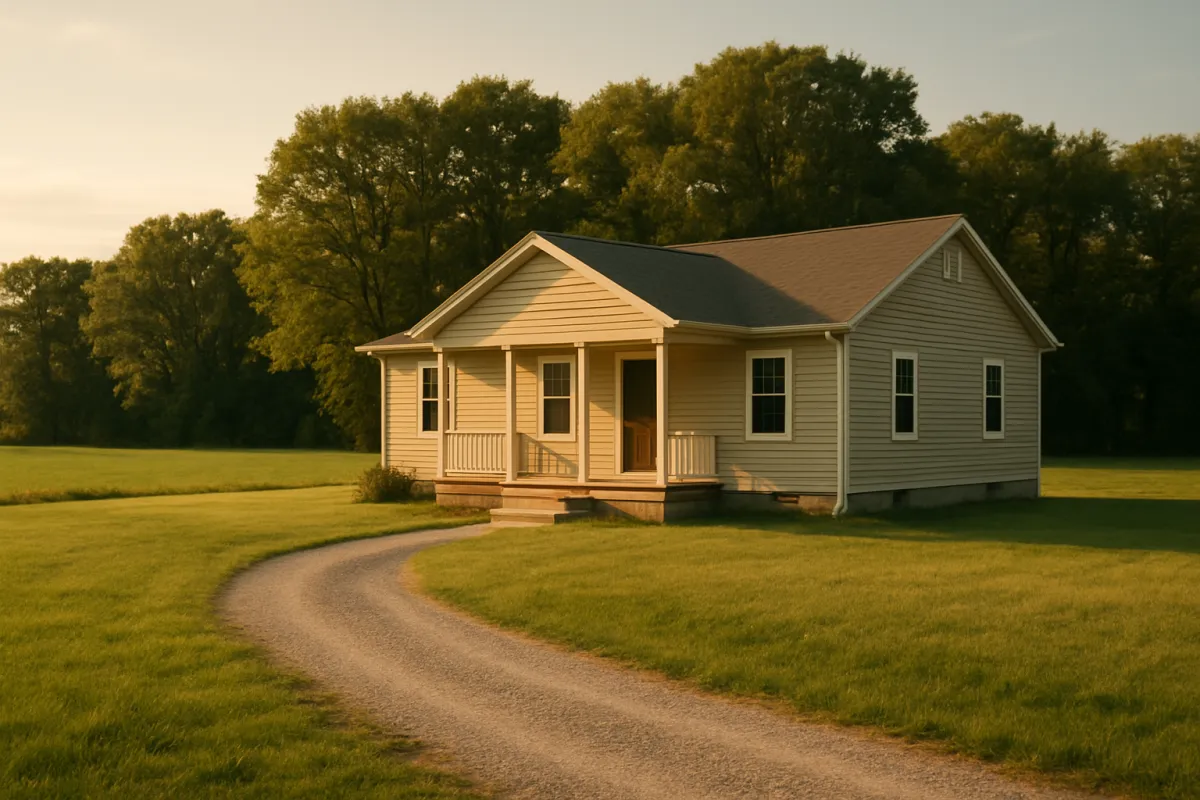
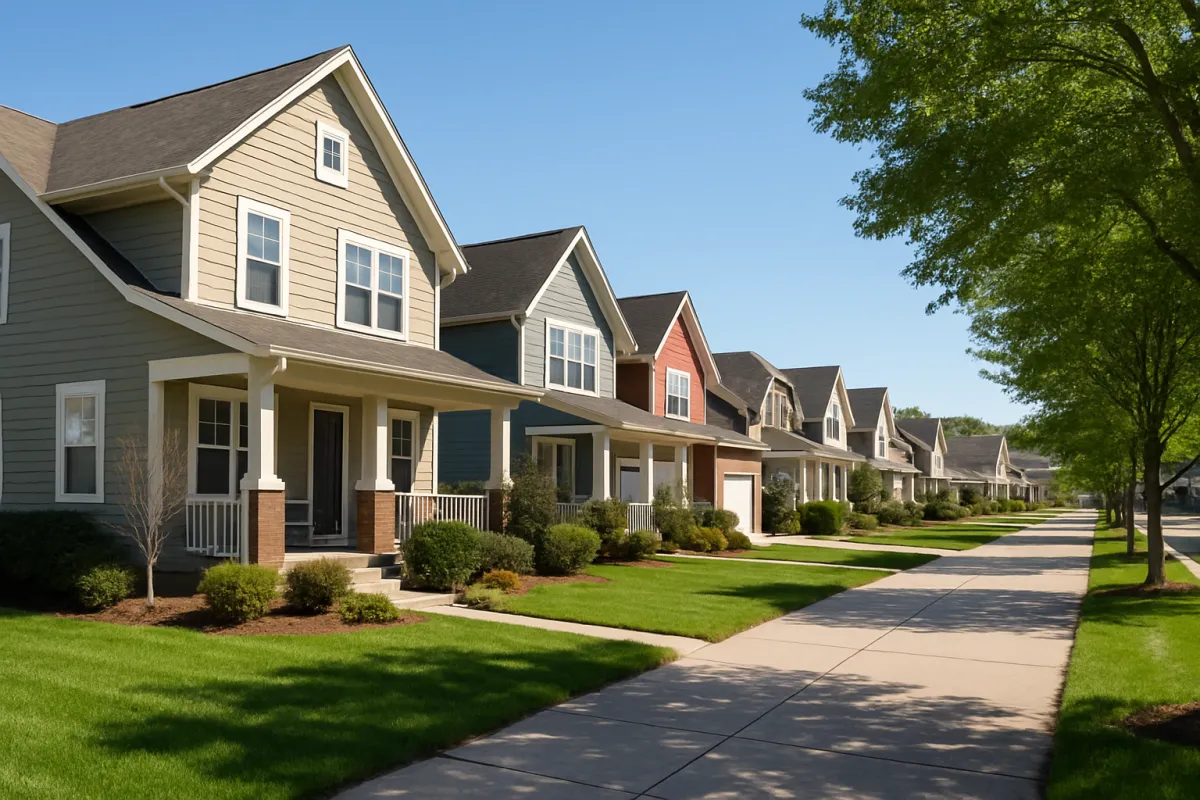
The single biggest misconception about this program is what qualifies as rural. Buyers picture farmland and rule themselves out before checking. The agency’s designation is built on population thresholds and rural development criteria applied to defined geographies, and the result is far broader than the word suggests. Small cities can fall inside eligible territory. Towns on the commuting edge of a metro routinely do. Whole subdivisions with sidewalks, streetlights, and a chain grocery two minutes away sit inside the eligible zone in a great many markets.
What matters practically is that eligibility is a map, not a vibe. Two houses on the same road can land on opposite sides of a boundary, and the boundary does not follow anything a buyer can see from the car. The right instinct is to stop guessing entirely. Before you fall in love with a listing, put its address into the USDA’s lookup and find out. That single check takes under a minute and reorders the whole shortlist for a buyer who is short on cash, because it tells you which homes carry a zero down option and which do not.
How to check a specific address on the eligibility map
The USDA publishes an address-level eligibility lookup on its own website, and it is the only authority worth using. Third-party maps, lender marketing pages, and screenshots circulating in local buyer groups all go stale, and a stale map is exactly the kind of error that surfaces after you are under contract. Enter the full property address on the agency’s tool and read the answer it returns for that address rather than for the town.
Three habits save real trouble. Check before touring, not after an offer, so eligibility shapes which homes you spend weekends on. Re-check any address you looked up months ago, because designations get revised and a saved result is not a guarantee. And when the tool returns an ambiguous or borderline result, ask an approved lender to confirm it rather than interpreting it yourself, since the lender has to certify eligibility to the agency and will look it up regardless. Our walkthrough on getting pre-approved for a mortgage covers where that check fits in the wider sequence.
Why so many outer suburbs qualify
It is worth sitting with why the eligible territory is so much larger than buyers expect, because the surprise is what causes people to skip the check. Designations are anchored to population and to rural development criteria within defined boundaries, and metropolitan growth does not automatically redraw them the moment a subdivision goes up. Development frequently arrives in a place before the designation catches up with it. The result is neighborhoods that look and function like ordinary suburbia while still sitting inside eligible territory on the agency’s map.
The practical consequence for a cash-constrained buyer is significant. The homes at the outer edge of a metro are often the ones already inside the affordable band, and a meaningful share of them also carry a zero down financing option that the same buyer cannot get twenty minutes closer in. Those two effects compound. Our coverage of zero-down mortgage options covers the wider set of routes, but for a buyer already shopping the outer ring this is frequently the strongest one available.
The household income limit and who gets counted
The second gate is income, and this is where the program differs most sharply from every other loan a buyer has encountered. Conventional, FHA, and VA underwriting all ask whether the borrowers earn enough. The USDA asks that too, but it adds a second question first: does this household earn too much to qualify for the subsidy at all? The limit is published by county and scales with household size, so a family of five faces a higher ceiling than a single buyer in the same county.
The part that catches people out is whose money counts. For the eligibility test, the agency generally looks at the income of adult members of the household, not merely the income of the people signing the note. A working adult child who still lives at home, a parent who has moved in, a partner who will live in the home but is not on the loan: income from those household members can be swept into the calculation even though none of them is a borrower and none appears on the title. Households have been pushed over a county limit by an adult member earning a part time wage, which is a genuinely counterintuitive outcome and one worth raising with a lender early.
Adjusted income and the deductions that lower it
The limit is not compared against gross household income. It is compared against an adjusted figure, and the adjustments are the reason a household that looks over the line on paper sometimes clears it in the actual calculation. Commonly cited deductions include a set amount for each dependent under 18, documented childcare costs that allow a household member to work, and additional allowances for households that include an elderly member or that carry disability-related and medical expenses.
Two cautions belong here. First, the specific deduction amounts and the income limits themselves are set by the agency and revised over time, so any figure printed in an article is an example rather than a current rule. Nothing in this market read should be treated as the number that applies to you. Second, the calculation is documented rather than estimated, which means childcare costs need receipts and household composition needs to be stated honestly. What the deductions do change is the answer to the question “should I even bother applying,” and for a household sitting a few thousand dollars over a limit the honest answer is frequently yes, ask a lender to run it properly.
Repayment income versus eligibility income
Two different income figures live inside a USDA file and confusing them is the most common source of bad advice. Eligibility income is the household-wide adjusted figure described above, and its only job is to decide whether the household is allowed to use the program. Repayment income is a narrower concept: the stable, documentable income of the borrowers, which is what the lender uses to size the loan and to calculate debt-to-income ratios.
The two figures move independently and often point in opposite directions. A household can have a high eligibility income because a non-borrower adult works, while the borrowers themselves have a modest repayment income that supports only a small loan. The reverse also happens. That is not a contradiction in the rules; it reflects the fact that the two tests answer different questions. When a lender or a forum post quotes an income number without saying which of the two it is, treat the advice as unusable until you know.
A worked example: the USDA income test
Numbers make the household rule concrete. Take an illustrative household of four adults and children under one roof: a borrower earning $78,000, a co-borrower earning $19,000, and an adult child working part time for $5,000, with two dependent children under 18 and $4,800 a year in documented childcare. Every figure here is an example chosen so the arithmetic can be followed, not a quote and not a current limit.
Borrower income alone is $78,000, which is what most people would put on a napkin. The household total is $102,000, because the adult child’s wages count for the eligibility test even though that person is not on the loan. Deductions come off next: two dependents at an illustrative $480 each is $960, plus $4,800 of childcare, for $5,760 total. Adjusted household income is therefore $96,240. Compared against an illustrative county limit of $110,000 for this household size, this household clears with roughly $13,760 of headroom.
Illustrative USDA income test for one household
Four figures for the same family, measured against an illustrative county limit of $110,000. Bars are scaled to that limit.
Illustrative figures only. Real limits vary by county and household size and are revised by the agency; deduction amounts change too. The shape is the lesson: counting every adult raises the figure, and the deductions bring part of it back.
Read the chart for its shape rather than its numbers. The jump from the first bar to the second is the requirement almost nobody anticipates, and it is large enough on its own to decide eligibility. The step back down from the second bar to the third is the part that rescues borderline households. Run your own version with the affordability calculator alongside a lender’s adjusted-income worksheet, and confirm the actual limit for your county on the USDA’s site before drawing any conclusion.
The guarantee fee: upfront and annual
USDA loans are not free of insurance-style cost; the cost is simply packaged differently and given a different name. There are two parts. An upfront guarantee fee is charged as a percentage of the loan amount at closing, and borrowers commonly finance it into the balance rather than paying it in cash, which preserves the zero down character of the transaction. An annual fee is then charged as a percentage of the loan balance and collected in twelve monthly pieces alongside the mortgage payment.
Both percentages are set by the agency, published for its fiscal year, and revised over time. A stale figure quoted confidently is worse than no figure, so this market read uses clearly labelled illustrative percentages in the worked example below purely so the arithmetic can be followed end to end. Do not budget from them. Ask a USDA-approved lender for the current upfront and annual fee that apply to your loan, in writing, before you commit to a payment number. The difference between two fee schedules a few years apart is large enough to move a monthly payment meaningfully.
How the USDA annual fee differs from FHA mortgage insurance
Buyers frequently assume the USDA annual fee and FHA mortgage insurance are the same product with different labels. They are close cousins, not twins, and the differences are worth understanding because they change the long-run arithmetic.
The first difference is the base. FHA’s annual premium is calculated in a way that stays close to the original loan amount over the early years, while the USDA annual fee is assessed against the loan balance, so it declines a little each year as the balance amortizes. On a thirty year loan that produces a slowly shrinking line item rather than a flat one. The second difference is duration language. FHA mortgage insurance on a low down payment loan commonly runs for the life of the loan and is removed only by refinancing out of the program. The USDA annual fee also runs alongside the loan, but because it tracks the declining balance it is a different curve even when it lasts a similar length of time. The third difference is scale: the USDA annual fee has historically been the smaller of the two as a percentage, which is a large part of why the program prices competitively. Our coverage of PMI and mortgage insurance puts the conventional side of that comparison in context.
Occupancy and primary residence rules
The occupancy requirement is short and it is not negotiable. A USDA guaranteed loan finances a home you will occupy as your primary residence. It is not available for a rental property, a vacation home, a flip, or a house you intend to buy for a relative to live in while you live elsewhere. Lenders confirm the intent at application and again at closing, and the certification you sign is a real document rather than a formality.
Two related requirements sit next to it. Applicants are generally expected not to own another dwelling that adequately meets their needs, which is a rule aimed at directing the subsidy toward households that do not already have housing rather than at second-home buyers. And unlike the FHA program, which permits an owner-occupied purchase of a small multi-unit building, the USDA program is oriented toward single-unit primary residences. A buyer whose plan is to live in one unit and rent the others should look at our FHA market read instead, because that structure is where the FHA rules are more accommodating.
The modest housing standard and what it excludes
Alongside the area map and the income cap sits a third boundary that gets less attention: the home itself has to be modest for the local market in size, design, and cost. This is not a fixed square footage rule and it is not a national price cap. It is a comparative standard, applied against what is typical for the area, and it exists because the program’s purpose is adequate shelter rather than aspirational housing.
In practice this rarely blocks the households the program is aimed at, because a buyer at or under a county income limit is usually not shopping for a property that would fail the test. Where it does come up is at the edges: unusually large or elaborate properties, homes with substantial income-producing components, and properties configured primarily around a business or farming operation rather than around living in them. Restrictions in this family have also historically touched features like in-ground swimming pools, with the treatment differing between the guaranteed and direct programs. If the home you are considering is unusual in any of those ways, raise it with the lender before you write an offer rather than discovering it during underwriting.
Property condition, the appraisal, and wells and septic systems
Every USDA purchase requires an appraisal, and that appraisal does two jobs. The familiar one is value: establishing that the home is worth at least the contract price, which protects the buyer and the guarantee alike. The less familiar one is condition. The property has to meet standards for safety, soundness, and sanitation, and the appraiser flags items that fall short.
The flags are the usual suspects on any government-backed loan: a roof at the end of its life, no functioning heat, exposed or unsafe wiring, active water intrusion, structural failure, or unsafe access. Because eligible areas skew toward places outside municipal service, two extra items come up far more often on USDA files than on others. Private wells frequently require water testing to confirm potability, and septic systems typically require evidence that they function properly. Both add lead time and both occasionally add cost. Build them into your contract dates. And do not mistake any of this for an inspection: our home inspection checklist covers the much wider set of issues an appraiser is not there to find, and our explainer on the home appraisal covers the valuation mechanics themselves.

Credit expectations and the automated underwriting threshold
The USDA does not publish a single national minimum credit score for the guaranteed program, which produces a lot of confused advice. What actually happens is that lenders run the file through the agency’s automated underwriting system, and a score in the neighborhood of 640 is commonly cited as the level at which that system will return an accept recommendation. An accept makes the file dramatically simpler to process, which is why 640 gets quoted as though it were a rule.
Below that neighborhood the loan is not automatically dead, but the path changes. The file has to be manually underwritten, which means a human at the lender evaluates it against documented standards rather than relying on the system’s recommendation. Not every approved lender is willing to do manual underwriting on USDA files, and those that are will look harder at the whole credit picture. Layered on top of all of this are lender overlays: individual lenders set their own minimum scores above whatever the program allows. The practical consequence is the same as on the FHA side, and our coverage of buying with weaker credit makes the point in general terms: shop more than one approved lender if your score sits near a threshold.
Manual underwriting and compensating factors
When a file goes to manual underwriting, the conversation shifts from a score to a story, and knowing what the story needs to contain is worth real money. Underwriters look for recent payment history that is clean, particularly on housing and installment debt. They look for a documented explanation of any past derogatory event, ideally one that is isolated and clearly resolved rather than part of a pattern. They look for stability in employment and income.
They also look for compensating factors, which are the file’s counterweights against whatever is causing concern. Cash reserves after closing are one of the strongest, because a household with a cushion survives a bad month. A housing payment that is close to or lower than the rent already being paid on time is another, since it demonstrates the payment is manageable in practice rather than only on paper. A conservative debt-to-income ratio is a third. None of this is a checklist that guarantees approval. It is a description of what the underwriter is trying to establish, and a borrower who assembles the evidence in advance rather than reacting to conditions makes the file materially easier to approve.
Debt-to-income ratios and how waivers work
USDA underwriting uses two ratios, and both are commonly cited as guidelines rather than absolute walls. The first compares the proposed housing payment, including principal, interest, taxes, insurance, the annual fee, and any association dues, against monthly repayment income. The second compares total monthly debt payments, housing included, against the same income figure. Figures in the region of 29 percent and 41 percent circulate widely as the reference points, and like everything else here they are program guidance the agency can revise rather than a permanent law.
What matters more than the numbers is that exceeding them does not automatically end the application. Ratios above the guidelines can be approved when the automated system supports it or when documented compensating factors justify it, which is where reserves, credit depth, and payment history come back into play. The reverse is also true: clearing the ratios is not by itself an approval. Our affordability math explains why a ratio a lender will approve and a payment a household can actually live with are two different questions, and the second one is the one that decides how the next five years feel.
What USDA loans cannot do
A short list of limits saves a lot of wasted effort. USDA guaranteed financing is a purchase and refinance program aimed at primary residences, and it does not extend into several places borrowers expect it to. There is no cash-out refinance under the program, so a homeowner wanting to convert equity into cash is looking at conventional options or at our coverage of second mortgages and home equity instead. Refinance options that do exist are generally aimed at borrowers already holding a USDA loan, refinancing into another one.
It also does not finance second homes, investment property, or the purchase of land on its own without a home. And the whole program depends on federal funding authority, which means that during a lapse in appropriations the issuance of new guarantees can pause. That has happened before. It is not a reason to avoid the program, but it is a reason to keep an FHA or conventional backup priced out when your timeline is tight, so a funding interruption does not become a failed closing.
The two-step approval and your timeline
There is a procedural feature of USDA loans that regularly surprises buyers and agents, and planning around it prevents most of the friction. The lender underwrites and approves the file, and then the agency reviews and issues its own conditional commitment. Two approvals, in sequence, with a queue between them.
The consequence is time. USDA files commonly take longer from contract to close than a conventional file at the same lender, because the second review is outside the lender’s control and because the agency’s turn time varies by office and by season. Add the well and septic testing common on rural properties and the timeline stretches further. Write realistic dates into the contract rather than optimistic ones, tell the listing agent up front that the loan carries an agency review step so the seller is not surprised, and start the file early. Our walkthrough on making an offer covers how to present a longer timeline without weakening the offer itself.
A worked example: a USDA loan on a $280,000 home
Take an illustrative $280,000 home in an eligible area, a qualifying household, nothing down, an illustrative 6.5 percent rate over thirty years, an illustrative upfront guarantee fee of 1.00 percent financed into the loan, and an illustrative annual fee of 0.35 percent. Every one of those figures is an example, chosen so you can follow the arithmetic, and none is a quote or a current schedule.
The base loan is the full $280,000 because there is no down payment. The illustrative upfront fee of 1.00 percent adds about $2,800, bringing the financed balance to roughly $282,800. Principal and interest on that balance at 6.5 percent over thirty years works out to about $1,787 a month. The illustrative annual fee of 0.35 percent on that balance is about $82 a month in the first year, and it drifts down slowly as the balance amortizes. Property taxes and homeowners insurance at an illustrative 1.5 percent of price annually add about $350, split here as roughly $233 in taxes and $117 in insurance. The all-in payment lands near $2,220.
Where the USDA monthly payment goes
Illustrative shares of an all-in payment near $2,220 on a $280,000 home with nothing down at an illustrative 6.5 percent.
Illustrative figures at illustrative fee percentages. The annual fee segment is the smallest slice on the chart and it shrinks slightly every year, because it is assessed against a balance that is amortizing down.
The chart is worth reading for the size of the fee slice. At an illustrative 0.35 percent it is roughly four percent of the payment, which is small enough that buyers who write the program off as expensive are usually reacting to the name rather than the arithmetic. Put your own price and rate into the affordability calculator and compare the result against what you are paying in rent today.
USDA versus FHA when you qualify for both
Now run the same house as an FHA loan, using the illustrative figures from our FHA coverage, so the comparison is like for like. With 3.5 percent down the buyer brings $9,800 and the base loan is $270,200. An illustrative 1.75 percent upfront premium of about $4,729 is financed in, bringing the balance to roughly $274,929. Principal and interest come to about $1,738. An illustrative annual premium of 0.55 percent on the base loan adds about $124 a month, and the same $350 covers taxes and insurance. The FHA all-in payment lands near $2,211.
That result is more interesting than a lopsided win would have been. The two monthly payments sit within about $9 of each other, with FHA marginally lower, despite the USDA borrower financing the entire purchase price and the FHA borrower putting down $9,800. Read honestly, the trade is not really about the monthly payment at all. It is about the cash. The USDA path gets the same household into the same house for roughly $9,800 less at the closing table, and the monthly difference is a rounding error next to that. For a household with savings to spare the calculus reverses, because the FHA borrower starts with an equity position the USDA borrower does not have.
| Requirement | USDA guaranteed | FHA |
|---|---|---|
| Down payment | Commonly 0% of appraised value | About 3.5% at the common credit threshold |
| Where the home can be | Must be in a USDA-designated eligible area | Anywhere, subject to county loan limits |
| Income ceiling | Yes, by county and household size, counting all adults | None |
| Ongoing charge | Annual fee against the declining loan balance | Annual MIP, often for the life of the loan |
| Upfront charge | Guarantee fee, commonly financed | Upfront MIP, commonly financed |
| Occupancy | Primary residence, single unit oriented | Primary residence, up to four units |
Treat the table as a map rather than a verdict. If both are open to you, price both with an approved lender on the same house on the same day. Our FHA market read covers that side of the comparison in its own detail.
USDA versus VA and low-down conventional
For a buyer eligible for a VA loan, the comparison usually resolves quickly. A VA loan carries no area restriction, no income ceiling, and no monthly mortgage insurance at all, which makes it the stronger zero down route for anyone who has earned it. Our market read on VA loans walks through the entitlement and funding fee mechanics. USDA becomes the relevant option for the very large group of buyers who have no military service to draw on, which is the group the program was designed for.
Against a low down payment conventional loan the trade is different again. Conventional financing at three to five percent down has no area map and no income ceiling in its standard form, but it asks for cash and it carries private mortgage insurance that is priced heavily off credit score. For a strong-credit borrower with savings it can be the cheapest of the options, in part because the insurance falls away as equity builds rather than running alongside the loan. For a buyer with limited savings in an eligible area, USDA usually wins on the only metric that is actually binding, which is how much money has to exist in the account on closing day. Our coverage of how much down payment you really need frames that question in general.
Seller concessions, closing costs, and financing above the price
Zero down does not mean zero cash, and treating the two as the same thing is how USDA buyers end up short at the table. Closing costs and prepaid items still apply: title work, the appraisal, recording, lender charges, the first year of homeowners insurance, and an initial escrow deposit. On an illustrative $280,000 purchase, closing costs in the region of three percent come to about $8,400. Our breakdown of buyer closing costs itemizes what sits inside that number.
Two features of the program help. Seller concessions are permitted within program limits and are used routinely on USDA transactions, so a negotiated credit toward closing costs is a normal ask rather than an unusual one. And uniquely among the common programs, when the appraised value comes in above the contract price, USDA rules allow financing certain closing costs into the loan against that excess value. That is not a loophole; it is a deliberate feature aimed at buyers whose obstacle is cash rather than income. It also will not always be available, because it depends entirely on the appraisal coming in high, so plan to have the cash and treat the alternative as upside.
Common USDA mistakes
The failures that cost buyers the most are all avoidable, and they repeat.
- Ruling the program out because the area does not feel rural. The designation is a map. Check the address on the USDA lookup before you assume anything about a neighborhood with sidewalks.
- Assuming only borrower income counts. The eligibility test reaches adult household members who are not on the loan. Raise your household composition with a lender at the first conversation.
- Giving up on the income limit without asking about deductions. Adjusted income is what gets compared, and dependents, childcare, and certain other allowances can move a household back under a limit.
- Budgeting from a fee percentage found in an article. Both the upfront and annual fee percentages are set by the agency and change. Get the current ones in writing from an approved lender.
- Writing a conventional-length closing timeline. The agency review step and any well or septic testing add days. Optimistic dates create real pressure late in the deal.
- Treating a zero down loan as a zero cash loan. Closing costs and prepaids are still due. Negotiate credits deliberately rather than hoping the appraisal saves you.
- Shopping only one lender when credit is borderline. Lender overlays and willingness to manually underwrite vary widely between approved lenders.
Who a USDA loan is right for
The clearest fit is a household with steady, documentable income that falls under the county limit, very limited savings, and a willingness to buy in eligible territory. That profile gets everything the program was designed to deliver: no down payment, a competitive payment because the annual fee is modest, and access to the outer-ring markets where the prices are already lower. For that household the program frequently moves the purchase forward by several years, which is the whole point.
The fit weakens in three situations. A household comfortably over the county limit is simply not eligible, and no amount of structuring changes that. A buyer with a substantial down payment saved should price a conventional loan honestly against it, since starting with real equity and no ongoing fee can cost less over a long hold. And a buyer who needs to be in a specific school district or commuting corridor that sits outside eligible territory should not distort the housing decision to chase the financing. Our coverage of buying on a lower income covers the wider set of options for households in that position.
A USDA readiness checklist
A short sequence that keeps a USDA purchase from stalling.
- Check the specific property address on the USDA’s own eligibility lookup before touring, and re-check any address you looked up months ago.
- Ask a USDA-approved lender to run the adjusted household income calculation, including every adult in the household, before you assume you are over or under.
- Confirm the county income limit for your exact household size from the agency rather than from a secondhand figure.
- Get the current upfront and annual guarantee fee percentages in writing, and ask for a payment quote that includes the annual fee in the monthly total.
- Ask each lender its own credit minimum and whether it will manually underwrite USDA files, and compare at least two or three.
- Budget the cash you will actually bring: closing costs and prepaid items, not just the down payment you are skipping.
- Build the agency review step and any well or septic testing into your contract dates, with room to spare.
- Keep an FHA or conventional quote alive as a backup so a funding or timing problem does not end the transaction.
- Order your own home inspection regardless of what the appraisal covers, since the two exercises answer different questions.
- Keep a reserve after closing. Starting at zero equity is far safer when the household has a cushion behind it.
USDA loans for a first time buyer
The program is used heavily by first time buyers even though there is no first-time-buyer requirement anywhere in it. The reason is structural. A household under a county income limit with little accumulated savings is exactly the profile that struggles most with the cash gate, and the cash gate is precisely what the USDA loan removes. Combine that with the fact that eligible territory skews toward the more affordable part of a metro and the program lines up with first purchases almost by construction.
What first time buyers underestimate is everything the down payment was hiding. Closing costs, moving expenses, the appliances the seller took, the immediate repairs the inspection surfaced, and the ongoing maintenance a landlord used to absorb all arrive in the first year. A household that reaches closing day with nothing left is fragile precisely when it can least afford to be. Our walkthrough on buying your first home covers the wider process, and it pairs naturally with this one for a buyer shopping eligible territory.
The bottom line
USDA loan requirements are four gates rather than one, and two of them decide almost every case. The property has to sit inside an area the agency currently designates as eligible, which is far broader than the word rural implies and which you confirm address by address on the USDA’s own lookup rather than by intuition. Total household income, counting adults who are not borrowers, has to come in under a county limit that scales with household size, and it is the adjusted figure after dependent, childcare, and other allowable deductions that gets compared. Occupancy and property condition are the other two: a primary residence, modest for its market, that passes an appraisal for safety and soundness, with well and septic testing where those systems are present.
Cost arrives as an upfront guarantee fee that is commonly financed and an annual fee billed monthly against a declining balance. On the illustrative $280,000 example above, that structure produced an all-in payment near $2,220 while asking for no down payment at all, within about $9 a month of the FHA version that required $9,800 at the table. The percentages behind those figures are examples, not a schedule, and the same is true of every income limit in this market read. Look up the address, ask an approved lender to run your adjusted household income properly, get the current fees in writing, and run the scenarios through the affordability calculator before you write an offer. Where it fits, it is the cheapest route into a house that most buyers never check whether they qualify for.
This market read is an educational explainer on how the USDA guaranteed loan program is structured, and it is not mortgage, lending, tax, legal, or financial advice. Every percentage, rate, fee, income limit, deduction amount, and dollar figure above is illustrative and rounded so the arithmetic stays followable, including the guarantee fee percentages and the county income limit used in the worked examples, which are invented examples rather than current published values. Eligible area designations, income limits by county and household size, adjusted income deductions, fee schedules, ratio guidance, and property standards are all set by the U.S. Department of Agriculture, applied by individual approved lenders who layer their own credit and income standards on top, and revised over time. Your address, your household, and your numbers will produce different answers from these. Verify the property on the USDA’s own eligibility lookup, obtain your county’s current income limit and the current fee schedule from the agency or a USDA-approved lender in writing, and speak with a qualified mortgage or housing professional about your particular circumstances before acting on anything here.
Frequently asked questions
What are the USDA loan requirements in short?
A USDA guaranteed loan turns on four gates rather than one. The property has to sit inside an area the USDA currently designates as eligible, which you confirm address by address on the agency's own eligibility lookup. Total household income, counting the income of adult household members whether or not they are on the loan, has to fall under the limit published for that county and household size after allowable deductions. You have to occupy the home as your primary residence, and the house itself has to be modest for the area and pass an appraisal for safety and soundness. Credit is the fourth gate, and it is set mostly by the lender rather than by a single national score floor.
How does the USDA decide which areas are eligible?
The USDA designates eligible rural areas using population thresholds and its own rural development criteria, and it publishes the result as an address-level lookup on its website rather than as a simple list of counties. The word rural is doing much less work than most buyers assume. Small towns, the edges of mid-sized metros, and a great many outer suburbs sit inside eligible territory, sometimes only a few miles from areas that do not qualify. Designations are reviewed and revised over time, particularly after new census data, so an address that qualified for a neighbor several years ago may not qualify today. Check the specific address on the USDA lookup rather than reasoning from how a place feels.
Whose income counts toward the USDA income limit?
This is the requirement that surprises people most. For the eligibility test, the USDA looks at the income of the household, not only the income of the people signing the note. That generally sweeps in an adult household member's wages even when that person is not a borrower and will not be on the title, which means a working adult child living at home or a parent who has moved in can push a household over a limit the borrowers alone would clear comfortably. A separate figure, repayment income, is what the lender uses to size the loan, and that one is based on the borrowers. Confirm how your specific household composition is treated with an approved lender before you assume either answer.
What deductions reduce income for the USDA limit?
The USDA compares adjusted annual household income to the limit, not the raw gross figure, and the adjustments can matter enough to change the answer. Commonly cited deductions include a set amount per dependent under 18, documented childcare expenses that let a household member work, and additional allowances for households with an elderly member or with disability-related and medical expenses. The specific deduction amounts are set by the agency and are revised over time, so any figure quoted in an article is illustrative rather than current. If your gross household income sits slightly over a county limit, it is worth having a lender run the adjusted calculation before you rule the program out.
Is the USDA guarantee fee the same as FHA mortgage insurance?
They serve a similar purpose and are structured differently. Both programs charge an upfront amount that is commonly financed into the loan plus an ongoing amount billed monthly. The important structural difference is what the ongoing charge is calculated on and how long it lasts. FHA's annual premium on a low down payment loan commonly runs for the life of the loan, while the USDA annual fee is assessed against the loan balance and therefore shrinks a little every year as the balance amortizes down. The percentages on both programs are set by the agencies and change, so treat any number you read as illustrative and get the current schedule from an approved lender.
What credit score do you need for a USDA loan?
The USDA guaranteed program does not publish a single national minimum credit score the way some borrowers expect. In practice, a score in the neighborhood of 640 is commonly cited as the threshold at which the automated underwriting system will return a favorable recommendation, which makes the file far simpler for a lender to process. Below that, the loan generally has to be manually underwritten, which means documented compensating factors, a closer look at payment history, and a lender willing to do the work. Individual lenders also set their own minimums above whatever the program allows, so a borrower declined by one approved lender can sometimes be approved by another with the same file.
Can you buy any house with a USDA loan?
No, and the property rules are stricter than the down payment headline suggests. The home has to be in an eligible area, has to become your primary residence, and has to be modest for the local market in size, design, and cost. Income-producing features and properties set up primarily for a business or farm operation are generally outside what the program is meant to finance. The appraisal also checks the home against safety and soundness standards, so an as-is fixer with a failing roof, no working heat, unsafe wiring, or water intrusion can stall. Where the home is on a private well or septic system, those systems typically face their own testing requirements.
Is a USDA loan better than an FHA loan?
Neither one wins on principle; the answer falls out of your numbers. USDA is the stronger option when you clear the area and income gates and are short on cash, because it can finance the whole price while FHA still asks for a down payment. FHA becomes the better answer when the address is outside eligible territory, when household income runs over the county limit, or when you have savings and would rather buy a larger equity position. In the illustrative example in this market read the two monthly payments land within single dollars of each other, and the real difference is the cash required at the closing table. Price both with an approved lender rather than choosing on reputation.

Hamza Hai is the editor of AbodeWave. She holds an MBA and reviews the site's articles against our editorial standards, checking that every figure is labelled for what it is, that nothing is presented as verified fact without a source the reader can check, and that the writing stays useful to a non-specialist.