
What's in this market read
- Before you start
- What a property tax assessment appeal actually challenges
- Informal review versus a formal appeal
- Confirm your deadline before you do anything else
- Pull the assessor record and check it against reality
- Build a comparable sales case
- Price what a successful appeal would actually save
- Decide whether paying for an appraisal makes sense
- File the informal request first
- Prepare for a formal hearing
- Present the evidence and answer questions
- What happens after the decision
- What a successful appeal is worth at different value reductions
- What a strong appeal case is built from
- The worked example: one appeal from record to decision
- Arguments that tend to succeed and the ones that usually do not
- Common mistakes in a property tax assessment appeal
- Troubleshooting situations that complicate an appeal
- Your property tax appeal checklist
- The bottom line
Short answer: A property tax appeal runs through two possible stages: an informal review directly with the assessor, which resolves many cases through a factual correction or a quick look at comparable sales, and a formal appeal to a separate board if that does not work. File on the correct deadline, which is often tied to an earlier valuation notice rather than the tax bill, bring comparable sales or a documented record error, and size the likely saving before you spend time or money on the case.
A property tax assessment appeal is not a complaint about the size of the bill. It is a specific, evidence-based argument that the value the assessor placed on a property is higher than it should be, made through a process with a deadline, a procedure, and usually two distinct stages. Most owners who feel their bill is too high have never actually compared their assessed value against recent sales of similar properties, which is the only comparison that an appeal is built on.
This market note walks the mechanism end to end: what an appeal can and cannot challenge, the difference between an informal review and a formal hearing, how to build a comparable sales case, how to size the dollar saving before committing time to the process, and what happens after a board decides. It sits alongside our property tax bill walkthrough, which explains the arithmetic a bill runs on, our escrow explainer, and our home appraisal note. The companion beside this note prices your own appeal case as you read.
Key takeaways
- An appeal challenges the assessor's value, not the tax rate and not flat fees riding on the bill, so size your case around comparable sales or a factual record error.
- Most jurisdictions expect an informal review first, a short conversation or written request with the assessor, before a formal filing with a separate board.
- The real deadline is often tied to an earlier valuation notice, not the tax bill, so confirm your window the moment a notice arrives rather than when the bill shows up.
- The annual saving is value reduction times your effective tax rate, and it is almost always smaller than the headline value gap suggests.
- A successful reduction typically persists until the next reassessment cycle, which is what makes a modest annual saving worth the paperwork over several years.
Before you start
This is a task measured in hours of preparation spread across days or weeks, not a single afternoon, because comparable sales take time to gather and a formal hearing has to be scheduled on the board’s calendar rather than yours. The difficulty is moderate. Nothing requires legal training, but the case is only as strong as the records behind it.
- Your current assessment or valuation notice, which carries the deadline that actually governs you. In many places this notice arrives separately from the tax bill, months earlier, with its own much shorter window.
- The assessor’s property record card, often available online, listing square footage, lot size, bedroom and bathroom counts, and condition notes. This is where factual errors hide.
- Recent sales of comparable properties, ideally three to five, close in size, age, condition, and location, sold near the valuation date your jurisdiction uses rather than today’s date.
- A calculator and a realistic sense of the dollar amount at stake. Our affordability calculator is useful alongside this note if a high tax bill has you rechecking the overall housing budget.
One framing note before anything else. Every dollar figure below is illustrative and built around a single consistent example, an assessed value of $375,000 with a 1.4 percent effective combined tax rate, so the arithmetic is followable rather than because those numbers are typical anywhere. Assessment cycles, appeal deadlines, evidence standards, and board procedures are set by state and local law, differ enormously by jurisdiction, and change over time. Confirm every current rule with your own assessor’s office or board of review before relying on it.
What a property tax assessment appeal actually challenges
An appeal challenges one thing: the value the assessor assigned to the property. It does not challenge the tax rate, which is set through a separate public budget process by each taxing body, and it does not challenge flat fees or special assessments riding on the same bill, which are calculated some other way entirely and generally sit outside an appeal’s reach. Our property tax bill walkthrough separates those pieces in detail, and that separation matters here because a successful appeal changes only the value-based portion of the total.
Inside that one target, the value, three kinds of arguments tend to work. A factual correction fixes something the record gets wrong about the property itself, such as square footage, a bedroom count, or a feature that no longer exists. A comparable sales argument shows that similar properties sold for less than the assessor’s figure implies around the relevant valuation date. An equity argument, accepted in some places and not others, shows that similar properties nearby are assessed at a noticeably lower fraction of their value than yours.
What rarely works is a general statement that the bill feels too high, or an argument based on what you personally believe the home is worth without supporting sales. Boards generally place the burden of proof on the owner, so arriving with organized evidence matters more than arriving with a strong opinion. The sections below build each kind of evidence in turn.

Informal review versus a formal appeal
Most jurisdictions structure an appeal in two possible stages, and knowing the difference before you start saves real time. An informal review is usually a low-cost or free, lightly structured conversation or written request directly with the assessor’s office. You point to a factual error or share a short list of comparable sales, and a meaningful share of disputes resolve right here, because a clerical fix does not need a hearing once the office agrees the record is wrong.
A formal appeal is the next stage if the informal step does not resolve things, or in places that do not offer an informal step at all. It typically means filing a written appeal with a separate board of review or equalization board by a stated deadline, with whatever evidence that board requires, commonly comparable sales, photographs, or in some cases an independent appraisal. The board is usually a distinct body from the assessor’s office, which is part of the design: an independent panel reviews the dispute rather than the office that set the value in the first place.
Treat the informal step as worth attempting even when you expect to need the formal one, because it costs little, it sometimes resolves the matter outright, and in many places you are required to attempt it before filing formally anyway. Ask your assessor’s office directly whether an informal step exists and what it requires, since the answer and the process differ by jurisdiction.
Confirm your deadline before you do anything else
The single most common way owners lose an otherwise strong appeal is never filing one at all, because the deadline passed before they realized it existed. In many jurisdictions the appealable event is a valuation notice issued months before the tax bill, with its own and often much shorter window, and by the time the bill arrives for payment the appeal window for that year may already be closed.
Treat the deadline as a date you chase, not an event you wait for. The moment any notice arrives from the assessor’s office, whether labeled a valuation notice, an assessment notice, or something else locally specific, read it for a deadline and write that date into a calendar immediately. If your county does not send a separate notice, ask the assessor’s office directly when the appeal window opens and closes for the current cycle.
Watch out for assuming last year’s deadline applies again, since dates can shift by a few days year to year even where the process itself does not change. A missed deadline in most places means waiting for the next cycle, with no exception for a reasonable excuse, so confirming the current date is worth a single phone call before any other step in this note.

Pull the assessor record and check it against reality
Before gathering a single comparable sale, request or download the property record card the assessor holds on file, since this is the fastest and often strongest source of a case. The card typically lists square footage, lot size, year built, room counts, and a condition rating, and assessors value a large number of properties from this record rather than from walking through each one individually.
Check every line against the actual property. A finished basement counted that was never finished, a garage recorded twice, an extra bathroom that does not exist, or a lot size carried over incorrectly from a subdivision split all inflate a value estimate, and none of them are visible from the total on the bill. This kind of factual error is usually the easiest evidence to present, because it does not require interpreting sales data, only pointing to a specific line and a specific correction.
If the record matches reality, the case moves to comparable sales instead, which is the next section. Either way, this check costs nothing but time and should happen before anything else, because a factual correction resolved informally can end the matter in a single phone call rather than a formal hearing months away.
Build a comparable sales case
If the record is accurate and the value still looks too high, the case shifts to comparable sales: recent sales of similar properties that support a lower figure than the assessor’s. The quality of the comparison matters more than the number of sales you gather, and boards generally favor three to five genuinely similar properties over a long list of loosely related ones.
Look for sales close in size, age, construction type, condition, and location, and as close as possible to the valuation date your jurisdiction actually uses, which is often a date months or even over a year before the notice arrives. A sale six months after the valuation date in a rapidly moving market tells you less than a sale from the correct window. Public records, your county’s own online parcel search, and a real estate agent’s market data are common sources, and agents are frequently willing to help pull comparables for a client even outside a transaction.
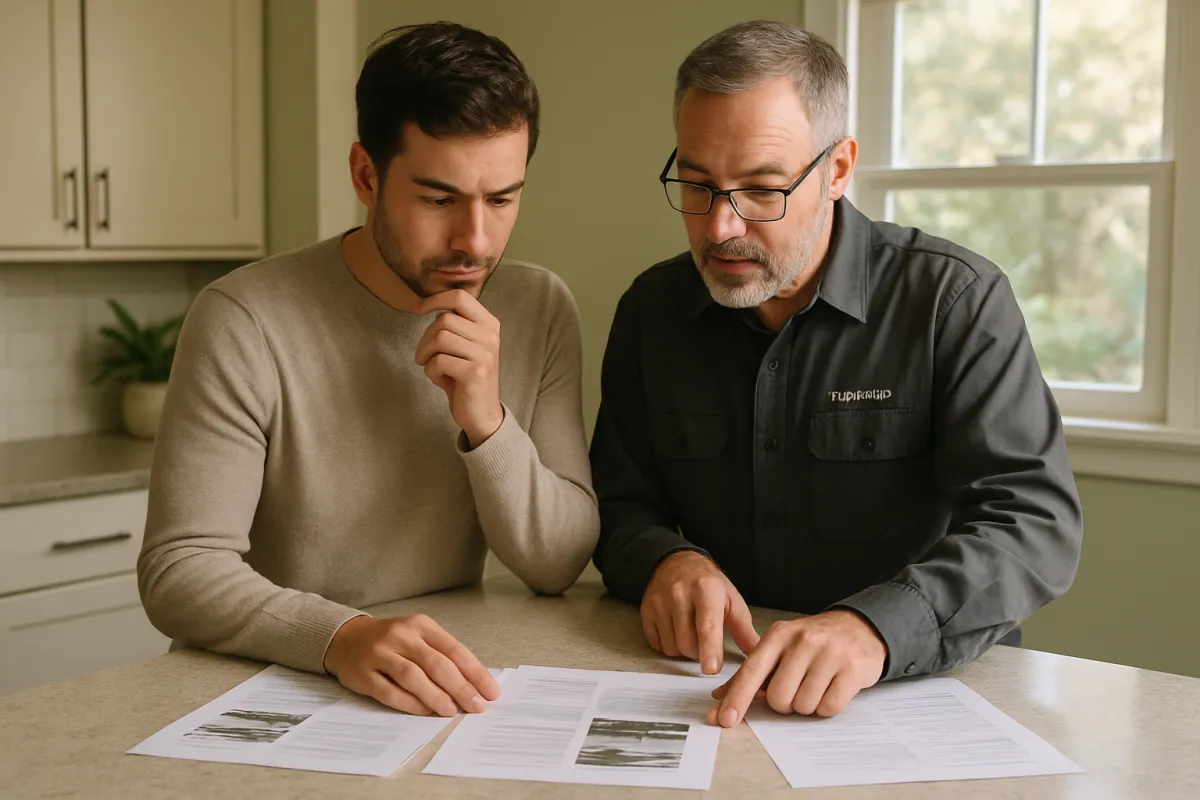
Present the comparables as a simple table: address, sale date, sale price, and the key characteristics that make each one comparable, with a short note on any adjustment for a genuine difference such as a finished basement one has and yours does not. On the illustrative case running through this note, three comparable sales clustering between $335,000 and $345,000 support a requested value of $340,000 against an assessed figure of $375,000.
Price what a successful appeal would actually save
Before investing more time, size the prize, because it is almost always smaller than the headline value gap makes it look. The annual saving is the value reduction multiplied by your effective combined tax rate, not the full dollar size of the gap itself.
On the running example, an assessed value of $375,000 and an effective combined rate of 1.4 percent produces a current tax of about $5,250. A comparable-sales-supported reduction to $340,000, a $35,000 cut, produces a new tax of about $4,760, for an annual saving of roughly $490. That is the number to weigh against the time an appeal takes, not the $35,000 reduction itself, which is a value figure rather than a tax figure.
The saving typically persists until the next reassessment rather than applying for a single year only, which changes the calculation meaningfully. A $490 annual saving is modest in isolation, but across a multi-year reassessment cycle it compounds into a few thousand dollars for the same hour of paperwork. Run your own assessed value, requested reduction, and rate through the companion above this section to see your own figure before deciding whether to proceed.
Decide whether paying for an appraisal makes sense
An independent appraisal is not required for most residential appeals, since public sales records and the assessor’s own comparable sales list are usually sufficient, but it strengthens a borderline case and is sometimes expected for larger or more complex disputes. The decision is a cost comparison, not a formality.
On the running example, an illustrative appraisal fee of $450 against a projected $490 annual saving pays for itself in under a year if the appeal succeeds, and continues saving in every year after that until the next reassessment. On a smaller gap, a $450 fee against a $150 annual saving takes three years to recover, which is still often worth it given the multi-year nature of the saving, but worth knowing in advance rather than discovering afterward.
Ask your local board what evidence it actually expects before paying for anything, since some boards weigh an independent appraisal heavily while others are satisfied with a well-documented comparable sales table at no added cost. Our home appraisal note explains how an appraiser forms an opinion of value, which is useful background whether or not you ultimately order one for this purpose.
File the informal request first
Where an informal step exists, use it before anything formal, since it is usually free or low cost and resolves a meaningful share of disputes outright. Contact the assessor’s office directly, in writing where possible, and present either the factual correction or the comparable sales case built in the sections above, clearly and briefly.
Keep the request focused on one or two of the strongest points rather than every possible argument at once. A record error plus two comparable sales is a tighter and more persuasive case than six loosely related points, and assessor staff reviewing a high volume of requests respond better to a case that is easy to evaluate quickly.
Ask for a specific outcome and a timeline for a response, and keep a copy of whatever you submit along with the date. If the informal request resolves the matter, you are done for this cycle. If it does not, or the office does not respond within a reasonable period, the formal appeal is the next step, and having a documented informal attempt on record is often useful there too.
Prepare for a formal hearing
A formal appeal is a structured filing with a deadline, evidence requirements, and typically a hearing or a paper review before a separate board of review or equalization board. Confirm the filing deadline, the required form, and the evidence the board expects well before you intend to file, since requirements differ by jurisdiction and missing a formatting requirement can delay or derail an otherwise strong case.
Organize the same evidence used in the informal step into whatever format the board specifies, typically a written statement, the comparable sales table, photographs where relevant, and any factual correction documentation. Some boards request these materials in advance of a hearing date, and arriving with everything already submitted on time makes the hearing itself shorter and more straightforward.
If a hearing is scheduled, confirm whether it is in person, virtual, or a paper review decided without your presence. Ask whether the assessor’s office will have a representative present and what that person typically addresses, since knowing the format in advance reduces the chance of being caught unprepared by a procedural step nobody mentioned beforehand.
Present the evidence and answer questions
At a hearing, lead with your strongest point rather than a lengthy history of why the bill feels unfair. If a factual record error exists, state it first and show the correction. If the case rests on comparable sales, present the table clearly, name the valuation date you used, and be ready to explain any adjustment made for a difference between your property and a comparable.
Expect the assessor’s office to respond, sometimes with its own comparable sales or an explanation for the figure on record. Listen for whether their response addresses your specific evidence or restates the original value without engaging with it, since a board generally weighs how well each side’s evidence holds up rather than who speaks more confidently.
Answer questions directly and stick to the evidence rather than general statements about affordability or fairness, since the board’s authority is limited to the value question, not to whether the tax burden feels reasonable. Bring extra copies of every document, since boards and assessor representatives alike sometimes need one on the spot.
What happens after the decision
A board’s decision usually falls into one of a few outcomes. It may agree and lower the value to the figure requested or to something between the original figure and your request, it may deny the appeal and leave the value unchanged, and in a smaller number of jurisdictions it may, in rare cases, raise a value if the review surfaces an undervaluation, which is worth knowing before filing a weak case purely to test the process.
If the result still looks wrong, many places allow a further appeal, often to a state tax tribunal, a state equalization board, or the court system, each with its own deadline and typically steeper evidence standards and cost than the first round. Most disputes never reach this stage, and it tends to be reserved for genuinely significant, well-documented disagreements rather than a routine next step.
Whatever the outcome, keep the decision letter and any supporting correspondence, since it becomes useful if the same question arises again at the next reassessment, and because a successful reduction is sometimes something you need to point to again if a future notice appears to disregard it.
What a successful appeal is worth at different value reductions
Seeing the saving scale with the size of the reduction makes the arithmetic concrete. The chart below holds the effective rate from the running example steady and ranks five illustrative reduction amounts by their annual dollar saving.
Illustrative annual tax saving by value reduction
Held at a 1.4 percent effective combined rate from the running example. Bars scaled to the largest reduction shown. Your own saving depends on your rate and your own supportable reduction.
Each bar is scaled to the largest reduction, $50,000 at $700 a year. The running example's $35,000 reduction, supported by the three comparable sales discussed above, fills 70 percent of the track at $490. These figures hold a 1.4 percent rate constant for comparison; your own rate will change every bar.
The pattern is simple but easy to lose sight of when staring at a value gap in isolation: the saving scales directly with the reduction and the rate, nothing else. A jurisdiction with a higher effective rate turns the same value reduction into a larger dollar saving, which is one more reason to confirm your own rate before deciding whether an appeal is worth the time.
What a strong appeal case is built from
Not every argument carries equal weight, and seeing the rough mix used in the case this note walks through helps explain why the earlier sections emphasized comparable sales and a factual record check ahead of anything else.
How the running example's case is weighted
An illustrative weighting of the case built in this walkthrough, not a measured statistic about appeals generally. Summing to 100 percent of the argument presented.
This is one illustrative way to weight a case, not a survey finding about how boards decide appeals generally. A case resting entirely on a clear factual error can lean on that one point alone, and a jurisdiction that does not accept equity arguments removes that slice entirely.
The reason comparable sales typically anchor the strongest cases is that they are the most direct evidence of what the market itself says a property is worth, while a record correction is powerful but only available when the record actually contains an error. An equity argument is the least portable of the three, since some boards weigh it seriously and others do not consider it at all, which is worth confirming with your own board before building a case around it.
The worked example: one appeal from record to decision
Follow one illustrative owner, call her Priya, through the whole process on the running numbers. Priya’s valuation notice shows an assessed value of $375,000, and her tax bill at a 1.4 percent effective combined rate works out to about $5,250 a year.
She first pulls the assessor’s property record card and finds it accurate: correct square footage, correct bedroom and bathroom counts, no finished space counted that is not finished. With the factual-error path closed, she moves to comparable sales, and her agent helps her pull three recent sales of similar homes nearby, closing between $335,000 and $345,000 near the relevant valuation date.
She files an informal request with the assessor’s office, presenting the three comparables in a simple table alongside her assessed value. The office responds that it needs a formal filing to adjust a value by this amount, so Priya files a formal appeal before the stated deadline, which she had already confirmed from her original notice weeks earlier.
At the hearing, she presents the same table, explains that all three properties are within a block of hers and similar in size and age, and answers a question about one comparable’s finished basement, which hers lacks, by noting she adjusted her requested value modestly to account for it. The board reduces her assessed value to $340,000. Her new tax comes to about $4,760, an annual saving of roughly $490, which persists until the next reassessment cycle. Run your own assessed value and requested reduction through the companion to see your version of Priya’s numbers.
Arguments that tend to succeed and the ones that usually do not
Arguments built on specific, checkable facts tend to succeed. A documented square footage error, a clear set of comparable sales near the correct valuation date, and in jurisdictions that accept it, a clear equity gap against similar nearby properties, all give a board something concrete to evaluate and rule on.
Arguments built on feeling or affordability tend to fail, regardless of how real the underlying concern is. A board’s authority covers whether the value is accurate, not whether the resulting bill is affordable, fair in some broader sense, or higher than a neighbor’s for reasons unrelated to value. A complaint that taxes have risen too much over several years, without comparable sales or a record error attached, generally goes nowhere, even when the underlying frustration is understandable.
A comparable sales case built on properties that are not genuinely similar, such as a larger or newer home, or one sold well outside the relevant valuation window, also tends to fail, because the comparison does the opposite of what it is meant to do. Quality of comparison matters far more than quantity of sales presented.
Common mistakes in a property tax assessment appeal
- Missing the real deadline. Acting on the tax bill’s date rather than an earlier valuation notice’s date is the single most common way an otherwise strong case never gets filed.
- Skipping the record check. Gathering comparable sales before confirming the assessor’s own property record is accurate means missing the simplest and often strongest evidence available.
- Using sales that are not genuinely comparable. A larger, newer, or differently located property weakens a case rather than strengthening it, even when its sale price is lower.
- Arguing affordability instead of value. A board can only rule on whether the assessed value is accurate, not on whether the bill feels fair or burdensome.
- Paying for an appraisal before sizing the saving. An appraisal fee that exceeds several years of the projected saving rarely makes sense, and the arithmetic takes five minutes to check first.
- Treating a denial as final without asking about further appeal. Many jurisdictions allow a second level of review that some owners never learn exists.
- Not keeping records of an informal request. A documented attempt to resolve things informally is often useful evidence that you acted in good faith if the matter proceeds to a formal hearing.
Troubleshooting situations that complicate an appeal
The assessor’s record looks accurate but the value still feels high. Move directly to comparable sales rather than continuing to search for a factual error that may not exist, since not every high assessment traces to a record mistake.
You cannot find enough comparable sales nearby. Widen the geography modestly while keeping property type, size, and age similar, and be prepared to explain in your case why the slightly wider search still produces a fair comparison.
The valuation date on your notice is unclear. Call the assessor’s office and ask directly, since using sales from the wrong window weakens an otherwise solid case without you realizing why a board pushed back.
You missed this year’s deadline. Mark the next valuation notice’s arrival on a calendar the moment it comes, and in the meantime confirm whether any retroactive correction is available for a clear factual error, since some jurisdictions allow that even outside the normal appeal window.
You bought the property recently and the assessed value is higher than your purchase price. A recent arms length purchase price is often strong evidence, but expect the board to ask whether the valuation date fell before or after your purchase in a moving market, and be ready to address that directly.
Your property tax appeal checklist
- Confirm your deadline first. Find the date on your most recent valuation notice, not the tax bill, and write it into a calendar immediately.
- Pull the assessor’s property record. Check square footage, room counts, lot size, and condition against reality before anything else.
- Gather three to five genuinely comparable sales. Match size, age, condition, and location, and use sales near the correct valuation date.
- Size the likely saving. Multiply your proposed value reduction by your effective tax rate before committing further time or money.
- Decide on an appraisal only after sizing the saving. Weigh the fee against the projected annual saving and the fact that a win often persists for several years.
- File the informal request first, where one exists. Keep a copy of what you submit and the date.
- Prepare the formal filing on time if needed. Confirm the required form and evidence with your board well before the deadline.
- Lead with your strongest point at a hearing. A record correction or a tight comparable sales table outperforms a long list of loosely related complaints.
- Keep every decision letter. It becomes useful again at the next reassessment cycle.
- Ask about further appeal if you lose. Many jurisdictions offer a second level of review that is easy to miss.
The bottom line
A property tax assessment appeal is a narrow, evidence-based argument about one number, the assessed value, made through a process with a real deadline and usually two stages: an informal review first, then a formal hearing if that does not resolve things. The strongest cases rest on a documented record error or a tight set of comparable sales near the correct valuation date, not on how high the bill feels.
On the illustrative case in this note, that process took a $375,000 assessed value down to $340,000 on three comparable sales, saving about $490 a year at a 1.4 percent effective rate, a saving that persists until the next reassessment rather than resetting every year. Whatever your own numbers, confirm your deadline first, check the record before you search for sales, and size the saving honestly before you decide the case is worth building.
This market note is educational reporting on how property tax assessment appeals generally work, not legal, financial, or tax advice. The $375,000 assessed value, the 1.4 percent effective rate, the $35,000 reduction, and every dollar figure built from them are invented to make one example reproduce cleanly, and none of it describes a real property or a real jurisdiction. Appeal deadlines, the existence and structure of an informal review stage, evidence standards, equity-argument acceptance, and the possibility of a value increasing on review are all set by state and local law, differ enormously between jurisdictions, and change over time. Confirm every current rule, deadline, and procedure with your own county assessor or board of review, and consult a qualified tax professional or attorney before filing an appeal involving significant value.
Frequently asked questions
How do I know if my property is a good candidate for a property tax appeal?
Start with the gap, not the feeling. Pull the assessed value the county has on file, then look for recent sales of genuinely comparable properties near the valuation date your jurisdiction uses. If those sales cluster meaningfully below the assessed value, or if the assessor record contains a factual error such as wrong square footage, you likely have a case worth pursuing. A property assessed close to what similar homes actually sold for is a weak candidate no matter how high the tax bill feels. The arithmetic in this market note, value reduction times your rate, tells you whether the likely saving is worth the time an appeal takes.
What is the difference between an informal review and a formal property tax appeal?
An informal review is typically a short conversation or a simple written request directly with the assessor's office, often free, aimed at fixing a factual error or presenting a few comparable sales before anything is filed formally. A formal appeal is a structured filing with a separate board of review or equalization board, on a stated deadline, with evidence requirements and often a hearing. Most jurisdictions expect you to try the informal path first, though a few do not offer one at all. Confirm which stages your own county actually uses before assuming either path is available to you.
How much can a successful property tax appeal actually save?
The saving is value reduction multiplied by your effective tax rate, and it is almost always smaller than the headline assessed-value gap suggests. On an illustrative $375,000 assessed value with a 1.4 percent effective rate, a $35,000 reduction supported by comparable sales is worth about $490 a year, not the full dollar value of the gap. A reduction that succeeds typically persists until the next reassessment rather than being a one-year event, which is what makes a modest annual figure worth the paperwork. Run your own assessed value and rate through the companion above before deciding.
Do I need to hire an appraiser or attorney to appeal my property tax assessment?
Not necessarily, and many successful appeals are filed by owners using public sales records and the assessor's own comparable sales list. An independent appraisal strengthens a borderline case and is sometimes required for larger commercial disputes, but for a typical residential appeal it is a cost to weigh against the projected annual saving rather than a requirement. A real estate attorney becomes more useful at a second-level appeal, in a complex ownership situation, or where the dollar amounts are large enough that professional help clearly pays for itself. Ask your local board of review what evidence it actually expects before paying for anything.
What evidence works best in a property tax assessment appeal?
Three kinds of evidence tend to carry the most weight. A factual correction, such as square footage or a bedroom count the record gets wrong, is usually the strongest and simplest to prove. Comparable sales of similar properties near the relevant valuation date come next, and the more similar the comparables are in size, age, condition, and location, the more persuasive they are. An equity argument, showing that similar properties are assessed at a noticeably lower fraction of their value, is accepted in some jurisdictions and not others. A general complaint that the tax bill feels too high, without any of the three, rarely moves a board.
Can my property taxes go up if I appeal and lose?
In most places a denied appeal simply leaves the existing assessment in place, but a small number of jurisdictions allow a review to result in a higher value if the process surfaces an undervaluation, which is a real though uncommon outcome worth knowing about before filing a weak appeal purely to see what happens. The more common downside is simply the time spent: gathering comparable sales, filing paperwork, and possibly attending a hearing, all for no change. Ask your local board whether an appeal can result in an increase before you file, since the answer differs by jurisdiction and is worth knowing in advance.
How long does a property tax assessment appeal take?
There is no single answer, because informal reviews, formal hearings, and any further appeal each run on their own local calendar, and some resolve in weeks while others stretch across months. An informal correction of a clear factual error is often the fastest outcome. A formal hearing before a board of review typically takes longer, since it has to be scheduled, and a second-level appeal to a state board or court can take considerably longer still. Ask your assessor's office or board of review for the current expected timeline when you file, rather than assuming a length from a different jurisdiction or a different year.
What happens if I miss the appeal deadline?
In most places missing the deadline means you lose the right to challenge that year's value, with no exception for a reasonable excuse, and you have to wait for the next assessment cycle or the next notice to try again. Some jurisdictions tie the real deadline to an earlier valuation notice rather than the tax bill itself, so a buyer relying on the bill alone can discover the window already closed. The practical fix is to mark the deadline on a calendar the moment a valuation notice arrives, not when the tax bill shows up months later, and to confirm the exact date with your assessor's office rather than assuming a typical length applies.

Hamza Hai is the editor of AbodeWave. She holds an MBA and reviews the site's articles against our editorial standards, checking that every figure is labelled for what it is, that nothing is presented as verified fact without a source the reader can check, and that the writing stays useful to a non-specialist.