What's in this market read
- What a termite inspection actually covers
- Why this is a separate inspection from your general home inspection
- How much does a termite inspection cost
- Why region and home type move the price
- Who pays for the termite inspection
- When is a termite inspection actually required
- The termite letter: what it is and what it is not
- What happens when damage or active infestation is found
- Drywood versus subterranean termites, and why it matters to cost
- Prevention: the conditions that invite termites
- Termite inspection versus a termite bond or warranty
- What an inspector cannot tell you
- New construction and pretreatment
- Questions to ask the pest control company before you hire one
- A worked example: one home, two inspection outcomes
- Regional termite risk, in plain terms
- How termite history affects resale and insurance down the road
- Weighing the inspection cost against the risk it checks
- How to find a licensed termite inspector
- How termite inspection timing fits your contract
- Common termite inspection mistakes
- What to do if you are selling instead of buying
- A termite inspection checklist
- The bottom line
Short answer: A standalone termite or WDO inspection commonly costs in the range of the mid double digits to around a couple hundred dollars for an ordinary home, varying by region and access. VA loans generally require the seller to pay for it in states where termites are a recognized risk; FHA and conventional loans have no blanket national requirement. It is a separate, specialized inspection from a general home inspection, performed by a licensed pest control professional.
What does a termite inspection cost, and is it actually required when you buy a house? A termite inspection, more formally a wood destroying organism or WDO inspection, is a visual examination performed by a licensed pest control professional looking specifically for termites, wood-boring beetles, carpenter ants, and similar organisms, along with any visible damage or conditions that tend to invite them. It is a narrower and more specialized check than the general home inspection most buyers already plan for, performed under a different license and focused on a different question: not the home’s overall condition, but specifically whether something is eating the wood that holds it together.
This market read works through termite inspections end to end: what the inspector actually looks at, how the cost compares across regions and home types, who typically pays, when a lender or loan program actually requires one, what the termite letter or clearance letter is and what it does and does not promise, what happens when damage or active infestation turns up, and how this inspection relates to, and differs from, the general home inspection. It pairs with our home inspection checklist and our home inspection cost read, and the termite cost companion on this page prices an illustrative estimate for your own situation. Once you have a number, weigh it against the rest of your purchase budget in the affordability calculator.
Key takeaways
- A termite or WDO inspection is a specialized check performed by a licensed pest control professional, separate from a general home inspection, focused on wood destroying organisms specifically.
- Cost commonly runs from the mid double digits to around a couple hundred dollars for an ordinary single-family home, varying with region, size, and access.
- VA loans generally require the seller to pay for it in states where termites are a recognized risk; FHA and conventional loans carry no blanket national requirement.
- The termite letter, or clearance letter, documents visible conditions at the time of inspection. It is not a warranty against future infestation.
- When damage or active infestation is found, the usual paths are seller-paid treatment and repair, a negotiated credit, or, in serious cases, termination under a contingency.
What a termite inspection actually covers
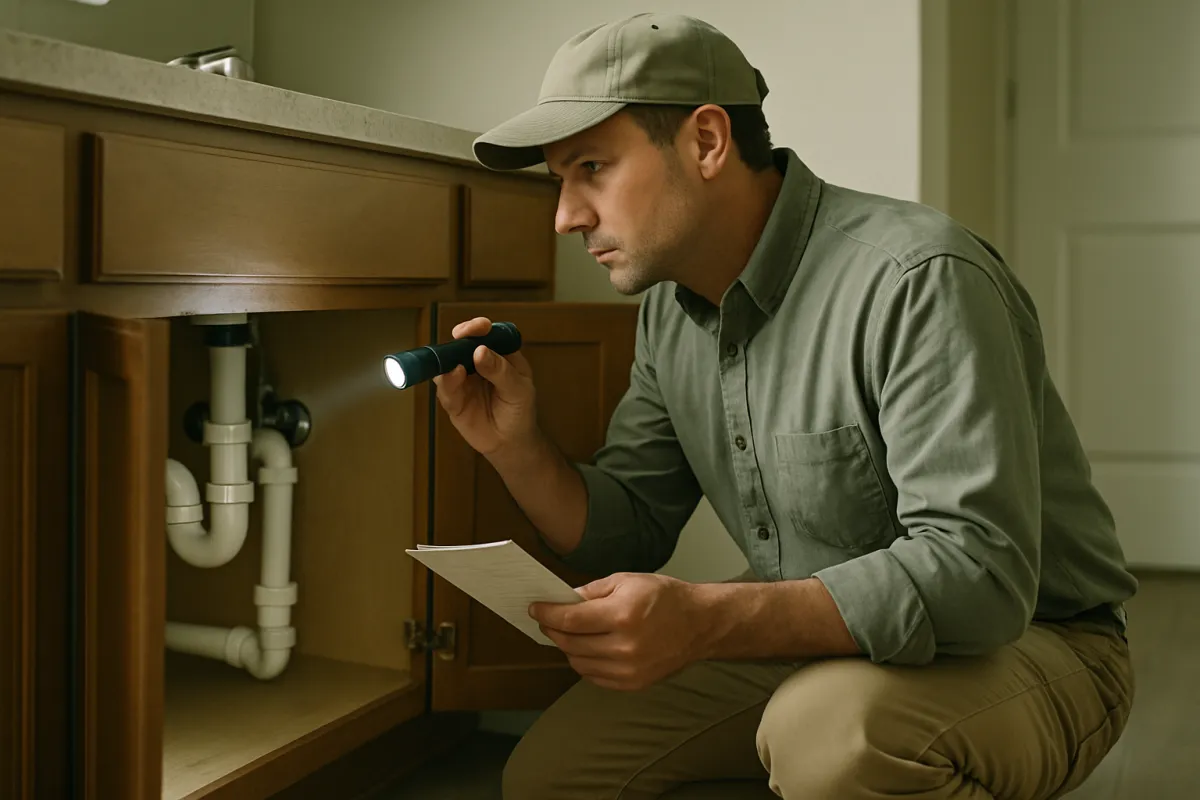
A termite or WDO inspection focuses on the parts of a home where evidence of wood destroying organisms is most likely to show up: the foundation and crawlspace, the areas around plumbing and utility penetrations, exterior siding and trim close to grade, the attic framing where accessible, exterior wood structures such as decks and fences attached to or near the home, and any visibly damaged or previously repaired wood the inspector can see without opening up walls or ceilings. The inspector looks for live insects, discarded wings, mud tubes along foundation walls, frass or sawdust-like droppings, soft or hollow-sounding wood, and visible past repairs that might indicate earlier damage.
It is, by design, a visual and accessible-area inspection. An inspector generally cannot see inside finished walls or beneath slab foundations, so a report stating no visible evidence found is a statement about what was observable at the time, not a guarantee that no hidden activity exists anywhere in the structure.
Why this is a separate inspection from your general home inspection
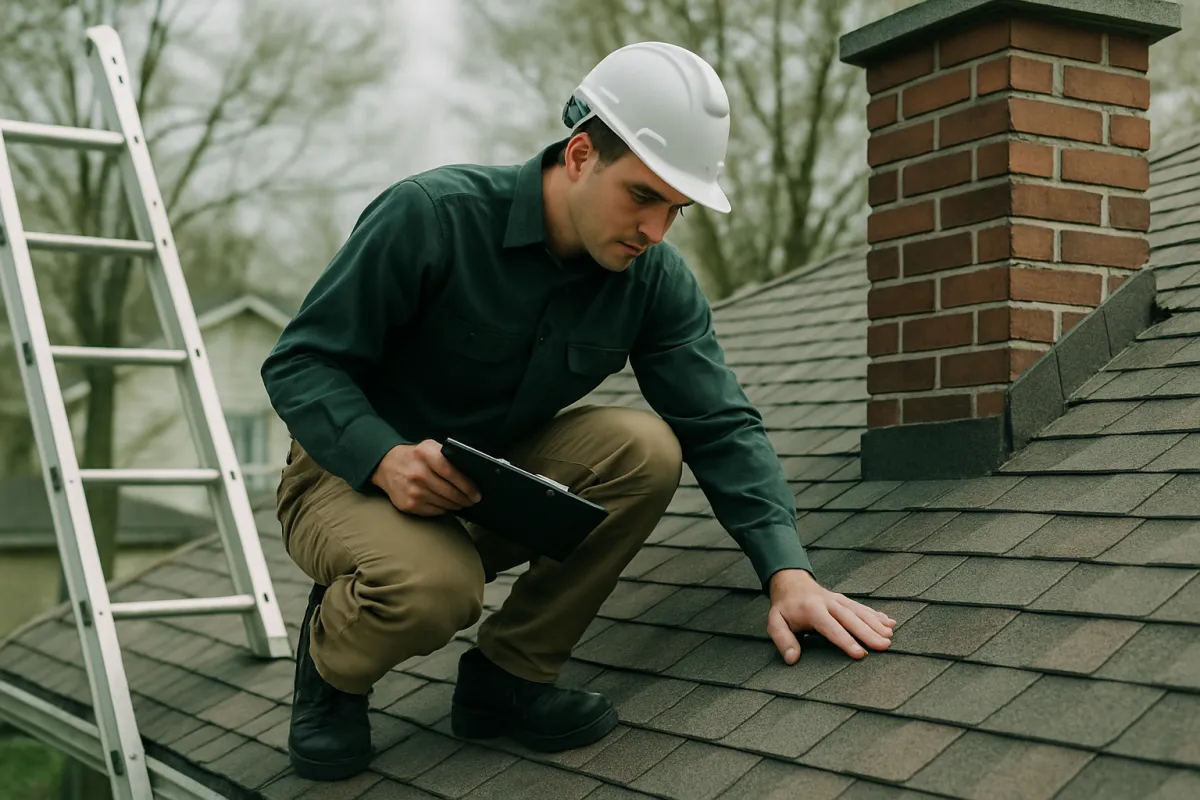
Our home inspection checklist covers the broad systems review most buyers already plan for: electrical, plumbing, roofing, HVAC, foundation, and general condition, performed by a licensed home inspector. That license and training does not automatically include certification to identify wood destroying organisms in the way a pest control license does. Some general inspectors are also licensed pest inspectors and offer both services together, but more commonly the termite or WDO portion is performed by a separate, specialized company under its own state licensing, even when it is scheduled on the same day as the general inspection for convenience.
Treating these as the same inspection is a common and avoidable mistake. A clean general home inspection report says nothing definitive about termite activity, and a clean termite report says nothing about the condition of the roof, the electrical panel, or the plumbing. Buyers who want both pictures need to arrange, and in many markets pay for, both inspections.
How much does a termite inspection cost
Cost varies with region, home size, foundation type, and accessibility, so treat any figure as an illustrative planning range rather than a quote. A standalone termite or WDO inspection on an ordinary single-family home is commonly cited in a range from the mid double digits up to around a couple hundred dollars, with homes in regions carrying heavier termite pressure, larger homes, and homes with difficult crawlspace or attic access tending toward the higher end. Bundling the termite inspection with a general home inspection sometimes brings a modest combined discount compared with ordering each separately, though not always, so ask for pricing both ways when you request quotes.
Illustrative termite inspection cost by scenario
Illustrative midpoints for an ordinary single-family home under different conditions. Actual quotes vary by region and provider.
Each bar is scaled to the illustrative $150 difficult-access figure. A bundled inspection at $75 is about half that; an easy-access standalone inspection at $120 is about 80 percent of it. Larger homes and regions with heavier termite pressure can run above all three illustrative figures.
Why region and home type move the price
Termite pressure is not uniform across the country. Warmer, more humid regions, particularly across the southeastern and southern United States, generally see higher termite activity and, correspondingly, more routine inspection and treatment business, which can affect both pricing and how seriously real estate professionals in those markets treat the inspection. Drier or colder regions see less routine termite pressure, though other wood destroying organisms, such as certain wood-boring beetles or carpenter ants in some regions, can still matter locally. Home type matters too: a home with a crawlspace generally takes longer to inspect thoroughly than a slab-on-grade home, and a larger home with more linear feet of foundation and more access points simply takes more time to cover.
Who pays for the termite inspection
Payment responsibility depends on the loan program and local custom, and it is worth checking both before assuming either side covers it.
- VA loans. The VA generally requires the seller to pay for the termite or WDO inspection in states the VA designates as having a recognized termite risk, a rule intended to prevent the cost from landing on the veteran buyer’s side of closing. Our VA loan explainer covers the program’s broader property requirements this rule sits alongside.
- FHA loans. No blanket national requirement exists, though a specific appraisal finding or state program could trigger one. Payment, where an inspection does happen, is typically a matter of local custom and contract negotiation.
- Conventional loans. Similarly no uniform national rule. Many conventional buyers choose to order one voluntarily as part of their own due diligence, in which case the buyer who orders it typically pays for it, unless the contract says otherwise.
- Local custom. In some markets sellers routinely provide a termite letter proactively as part of preparing a home for sale, regardless of loan program, because it smooths the transaction for any buyer’s financing.
Read your own purchase contract and ask your agent what is customary in your specific market rather than assuming a rule that may not apply to your transaction.
When is a termite inspection actually required
The clearest required case is a VA loan in a state the VA has designated as carrying termite risk, where the inspection and seller-paid requirement is a standard part of the VA’s minimum property requirements. Outside that case, requirements are inconsistent. An FHA or conventional appraiser who observes visible signs of damage or activity during the appraisal can call for a termite inspection as a condition of the loan, even without a blanket program rule requiring one on every file. Some state-specific loan programs, and occasionally a specific lender’s own overlay, add a requirement beyond what the base loan program mandates. And many buyers, regardless of any requirement, choose to order one voluntarily simply because the cost is modest relative to the risk being checked.
The termite letter: what it is and what it is not
The termite letter, formally a wood destroying organism inspection report and often completed on the standardized NPMA-33 form, is the document the inspecting company produces after the visual inspection. It states what was found: no visible evidence, evidence of past infestation with or without visible damage, or evidence of active infestation, along with notes on any conditions observed that tend to attract termites, such as wood-to-soil contact, excess moisture, or debris against the foundation. A letter stating no active infestation found is sometimes called a clearance letter, and lenders requiring a termite inspection typically want this specific document in the closing file.
It is important to understand what this letter is not. It is not a warranty against future infestation, and it is not a guarantee that no activity exists anywhere inaccessible to visual inspection. It is a professional’s documented observation of visible conditions on the date of the inspection, which is exactly why some buyers choose to pair it with an ongoing pest control service contract that includes periodic monitoring after they move in.
What happens when damage or active infestation is found
An inspector who finds visible damage or active infestation documents the location, extent, and type of organism where identifiable, and that report becomes the basis for a negotiation typically run through the purchase contract’s inspection or repair contingency, similar in structure to what our home inspection checklist describes for general inspection findings. The paths that typically follow:
- Seller-paid treatment and repair before closing. The most common resolution when the damage is moderate and the seller is willing, with the buyer typically requesting a follow-up clearance letter confirming the treatment was completed.
- A credit or price reduction in place of repairs. Used when the buyer prefers to handle the treatment and repair themselves after closing, often at a negotiated dollar amount rather than a specific repair scope.
- A split arrangement. Some negotiations land on the seller treating the active infestation while the buyer accepts cosmetic repair work after closing, when the structural concern is addressed but the finish work is less urgent.
- Termination under a contingency. Reserved for cases where the damage is extensive enough that the buyer no longer wants to proceed, and only available where the purchase contract includes an applicable contingency and its deadline has not passed.
Treatment cost itself varies considerably by species, extent, and treatment method, commonly ranging from a few hundred dollars for a localized spot treatment to several thousand for a larger infestation or a whole-structure treatment, so get an actual quote from a licensed pest control company rather than negotiating against a remembered figure.
Drywood versus subterranean termites, and why it matters to cost
The two broad termite categories behave differently, and that difference affects both detection and treatment cost. Subterranean termites live in the soil and build mud tubes to travel between the ground and the wood they feed on, which means their presence is sometimes visible along a foundation wall even without seeing the insects themselves, and treatment commonly involves a soil or foundation-perimeter treatment. Drywood termites live entirely within the wood itself without needing soil contact, which can make them harder to detect from a basic visual inspection and sometimes requires a more extensive, and more expensive, treatment such as whole-structure fumigation when an infestation is significant.
A buyer in a region where both types are a concern should ask the inspector directly which type, if any, was identified, since the answer changes both the treatment conversation and the realistic cost range being negotiated.
Prevention: the conditions that invite termites
Several conditions around a home’s exterior and foundation commonly show up in an inspector’s notes as risk factors, independent of whether active infestation is currently present. Wood-to-soil contact, where a deck post, fence, or siding touches the ground directly rather than sitting on a concrete footing or metal standoff, is one of the most commonly cited. Excess moisture near the foundation from poor drainage, a leaking gutter, or irrigation spraying directly against the house is another, since moisture-softened wood is more attractive to several wood destroying organisms. Wood debris, mulch piled high against the foundation, and stored firewood close to the house round out the common list.
None of these guarantee future infestation, and none of them are things an inspection report can predict with certainty, but a buyer who understands the common risk factors is in a better position to maintain the property after closing and to ask informed questions if an inspector flags one of them.
Termite inspection versus a termite bond or warranty
A termite bond, sometimes called a renewable termite warranty or service agreement, is a different product from the one-time inspection a buyer orders during a purchase, and the two get confused often enough to be worth separating clearly. The inspection is a point-in-time visual check producing a report on conditions observed that day. A termite bond is an ongoing contract with a pest control company that typically includes periodic reinspection, a defined treatment response if active infestation is found during the contract term, and in some versions a repair guarantee for new damage that occurs while the bond is active and the required reinspections have been kept current.
Some sellers transfer an existing termite bond to the buyer at closing, which can be a genuine value add worth asking about directly, since starting a fresh bond without the transfer may involve a new initial treatment cost even on a home that was previously protected. Ask the seller’s agent whether a bond exists, whether it is transferable, and what the annual renewal cost runs, and treat that figure as a separate, recurring line item from the one-time inspection fee covered elsewhere in this market read.
What an inspector cannot tell you
A visual inspection has real limits, and understanding them prevents a buyer from over-trusting a clean report. An inspector generally cannot see inside finished wall cavities, beneath a slab foundation, or within framing members that are fully enclosed, so activity confined entirely to those spaces can go undetected even by a careful, experienced inspector. A very recent infestation may not yet have produced the visible signs, mud tubes, frass, or exit holes, that a trained eye looks for, meaning a clean report reflects an absence of visible evidence rather than a certainty that no organism is present anywhere in the structure.
This is exactly why many pest control companies offer an ongoing bond or service contract rather than positioning the one-time inspection as a permanent clearance. A buyer who wants more certainty than a single visual check can provide should ask directly about reinspection intervals and what, if anything, a bond would cover that a one-time report does not.
New construction and pretreatment
A newly built home follows a different path than an existing one. Many jurisdictions in higher termite-risk regions require or commonly include a soil pretreatment, or in some cases a termiticide barrier or physical barrier system installed during construction, specifically to deter subterranean termites from reaching the structure in the first place. Builders in these areas often provide documentation of the pretreatment method used and sometimes a bond specific to that treatment.
A buyer purchasing new construction should ask the builder directly whether pretreatment was performed, what method was used, and whether a bond or warranty covers it, rather than assuming a brand new home carries no termite consideration simply because there is no existing damage to find yet. Our new construction market read covers other due diligence items specific to a newly built home that round out this kind of pre-closing documentation review.
Questions to ask the pest control company before you hire one
A short list of direct questions tends to surface the details that matter most. Ask whether the quoted price is for a standalone inspection or bundled with treatment contingency, since some companies quote a flat inspection fee while others build in an assumption about likely follow-up work. Ask specifically whether they issue the standardized NPMA-33 form, since some lenders require that exact document rather than a generic report. Ask how they handle limited access, such as a crawlspace with a small opening or an attic without a permanent ladder, since access limitations can affect both the thoroughness of the inspection and, in some cases, the price.
Ask what their reinspection or warranty options look like if you want ongoing protection after closing, and ask how quickly they can schedule given your contract’s contingency deadlines. Finally, ask for proof of their current state pest control license, since this is a distinct credential from a general home inspector’s license and is worth confirming directly rather than assuming every provider who offers the service is properly licensed to perform it.
A worked example: one home, two inspection outcomes
Walk one illustrative scenario through to make the comparison concrete. A buyer orders a standalone termite inspection on an ordinary home with moderate crawlspace access, quoted at an illustrative $120. The inspection comes back clean, with a clearance letter noting no visible evidence of active infestation, and the transaction proceeds with that document going into the closing file.
A comparable illustrative home nearby, inspected by the same company for the same $120 fee, turns up visible mud tubes along one section of the foundation and some softened wood framing near a bathroom plumbing penetration. The pest company quotes an illustrative $650 for localized treatment and recommends a licensed contractor estimate for the wood repair, which comes back at an illustrative $800. The buyer and seller negotiate a $1,450 credit at closing, covering both figures, rather than having the seller manage the repairs directly before the closing date.
Illustrative cost on the home with active infestation found
Illustrative breakdown of the $1,450 total credit negotiated in the worked example, on top of the $120 inspection fee already paid separately.
On this illustrative $1,450 credit, treatment is about 44.8 percent and wood repair about 55.2 percent. The $120 inspection fee that found the problem in the first place is a separate, much smaller cost paid earlier and is not part of this credit.
Regional termite risk, in plain terms
Termite pressure is not evenly distributed across the country, and understanding roughly where your purchase falls on that spectrum helps calibrate how seriously to treat the inspection. The warmer, more humid regions across the southeastern and southern United States, along with parts of the West Coast and other warm, moisture-prone areas, generally see the heaviest subterranean termite activity, and real estate practice in those regions often treats a termite inspection as close to routine regardless of loan program. Cooler, drier regions generally see less pressure from subterranean termites specifically, though other wood destroying organisms, including certain wood-boring beetles and, in some regions, carpenter ants, can still matter locally even where classic termite risk is lower.
This is a general pattern, not a precise rule for any specific property, since local microclimates, soil conditions, and a home’s own moisture management can shift its individual risk up or down from the regional average. Ask a local licensed pest company how they would characterize risk in your specific neighborhood rather than relying on a broad regional impression alone, and treat a home in a nominally lower-risk region that shows wood-to-soil contact or chronic moisture issues as still worth a careful look.
How termite history affects resale and insurance down the road
A documented history of termite damage or treatment does not have to be a permanent mark against a property, but it is worth understanding how it can surface again later. Many sellers disclose prior termite treatment or repair as part of standard property disclosure requirements, and a buyer purchasing a home with that history should ask for documentation of the treatment performed and any repair work completed, since a well-documented past treatment with no recurring activity is a very different situation from an undocumented or incomplete one.
Homeowners insurance treats termite damage distinctly from most other claims: it is commonly excluded from a standard policy as a maintenance issue rather than a sudden, accidental loss, which means the repair cost in most cases falls to the homeowner rather than an insurer regardless of when the damage occurred. This is one more reason the inspection and any resulting negotiation before closing matters more than it might for a risk that insurance would otherwise absorb later. If you are buying a home with documented past treatment, ask specifically whether an active bond transferred with the sale, since that ongoing protection is the main practical safeguard against a repeat of the same cost.
Weighing the inspection cost against the risk it checks
Set against the backdrop of a full home purchase, a termite inspection fee is a small number, and that is exactly the point. An inspection commonly costs a small fraction of what even a modest localized treatment and repair would run if an active infestation went undetected until it had caused structural damage, and it costs an even smaller fraction of what a larger, whole-structure treatment and extensive wood repair could run in a worst case. Skipping the inspection to save a modest fee is one of the more common places buyers in lower-risk regions talk themselves out of a worthwhile check, reasoning that their area “doesn’t really have termites,” when a local licensed company is in a far better position to make that judgment for a specific property than a general impression is.
Weigh the inspection fee the same way you would weigh any other due diligence cost during a purchase: as a small, known number paid specifically to avoid a much larger, unknown one. The termite cost companion on this page and the illustrative worked example further down both frame the comparison directly in dollar terms.
How to find a licensed termite inspector
Ask your real estate agent for a referral first, since an agent working regularly in your market usually has a working relationship with a licensed local pest control company familiar with the area’s common termite issues and the documentation lenders expect. Confirm the company and the specific inspector performing the work hold a current state pest control license, since this is a separate licensing category from a general home inspector’s license, and ask directly whether they issue the standardized NPMA-33 form your lender may require. If you are buying in an area with heavier termite pressure, ask how many similar inspections the company performs in the neighborhood, since local experience with the area’s typical construction and common problem spots is genuinely useful.
How termite inspection timing fits your contract
Scheduling matters more than buyers sometimes expect, because a termite finding that arrives after an inspection contingency deadline has passed can leave a buyer with far less negotiating leverage than one that arrives in time. Our closing timeline market read covers how the inspection window typically sets the pace for the early part of a purchase, and a termite inspection, whether bundled with the general inspection or scheduled separately, needs to land inside that same window to be useful as a negotiating tool rather than just background information gathered too late to act on.
Ask your agent to confirm the termite inspection is scheduled early enough that a finding, if there is one, leaves real time to request repairs, negotiate a credit, or, in a worst case, exercise a contingency before its deadline passes. A buyer who schedules it as an afterthought near the end of the contingency period risks discovering a real problem with no practical way left to respond to it within the contract’s own terms.
Common termite inspection mistakes
- Assuming the general home inspector already checked for termites. Unless specifically licensed and contracted to do so, a general inspector’s report does not cover wood destroying organisms with the same scope as a dedicated WDO inspection.
- Skipping the inspection because the loan program does not require it. A modest inspection fee is cheap insurance against a structural cost that can run into the thousands if discovered later.
- Treating a clean report as a permanent guarantee. The letter documents conditions on the inspection date. Ongoing risk, especially in high-pressure regions, does not disappear afterward.
- Negotiating repairs before getting an actual treatment quote. Agreeing to a dollar figure before a licensed pest company prices the specific treatment needed can leave either side over or under covered.
- Confusing drywood and subterranean termite treatment costs. The two categories can carry very different price tags, and assuming one without asking the inspector can distort a negotiation.
- Not asking who pays before the contract is signed. VA rules aside, payment responsibility is negotiable, and leaving it unaddressed until late in the process invites a late-stage disagreement.
What to do if you are selling instead of buying
Everything above is written from a buyer’s perspective, but a seller reading this market read benefits from the same information in reverse. Ordering a termite inspection proactively before listing, and addressing any findings ahead of a buyer’s own inspection, can prevent a last-minute negotiation from derailing a deal that is otherwise close to done. A seller who already holds a current clearance letter or a transferable termite bond is in a position to present that documentation to a buyer’s lender early, which can smooth financing on a VA purchase in particular, where the inspection and seller-paid requirement is close to automatic in a termite-risk state. Our seller closing costs read covers how a line item like this typically fits into the seller’s own side of a transaction’s expenses.
A termite inspection checklist
- Ask your lender directly whether your specific loan program and state require a termite inspection.
- Get the inspection scheduled early, ideally alongside your general home inspection, so any findings have time to work through the contract’s contingency deadlines.
- Confirm the company’s pest control license and ask whether they issue the standardized NPMA-33 form.
- Read the report closely, not just the summary line, for any noted risk conditions even where no active infestation was found.
- Get an actual treatment and repair quote before negotiating a credit or price adjustment if damage is found.
- Ask about ongoing protection, such as an annual inspection or pest control service contract, once you own the home.
The bottom line
A termite inspection is a specialized, licensed check focused specifically on wood destroying organisms, separate from the general home inspection most buyers already plan for, and it commonly costs from the mid double digits to around a couple hundred dollars for an ordinary home depending on region, size, and access. VA loans generally require the seller to pay for it in states the VA designates as carrying termite risk; FHA and conventional loans carry no blanket national requirement, which makes it worth ordering voluntarily in many cases given how modest the cost is relative to what active infestation can cost to fix.
Confirm with your lender whether your loan and location require one, get it scheduled alongside your general inspection, and read the resulting letter for noted risk conditions even on a clean report. Price an illustrative scenario with the termite cost companion on this page, weigh it against your overall purchase budget in the affordability calculator, and get an actual treatment quote from a licensed pest company before agreeing to any repair credit if damage turns up.
This market read explains termite and wood destroying organism inspections for general understanding, not as pest control, legal, or financial advice. The dollar figures above are illustrative planning ranges chosen to show how costs typically compare, not a quote for any specific home or region. Inspection requirements, costs, treatment methods, and which organisms are a concern vary by state, lender, loan program, and local termite pressure, and they change over time. Confirm current requirements with your lender, get quotes from a licensed local pest control company, and consult a qualified professional about any damage or infestation specific to your property.
Frequently asked questions
What is a termite inspection and why does it matter when buying a house?
A termite inspection, sometimes called a wood destroying organism or WDO inspection, is a visual examination of a home's accessible structure, typically the foundation, crawlspace, attic, exterior siding, and areas around plumbing penetrations, performed by a licensed pest control professional looking for active infestation, past damage, and conditions that commonly attract termites or other wood destroying insects. It matters to a buyer because termite damage can compromise structural wood over time and because the repair cost, if damage is found, can be a meaningful negotiating point before closing. Many buyers also need the inspection simply because their loan program or lender requires it.
How much does a termite inspection cost?
A standalone termite or WDO inspection is commonly cited in a range roughly from the mid double digits to around a couple hundred dollars for an ordinary single-family home, though the exact figure varies by region, home size, accessibility, and whether the inspection is bundled with a broader general home inspection. Homes in regions with heavier termite pressure, or homes with difficult crawlspace access, sometimes run toward the higher end of that range. Treat any number here as an illustrative planning figure and get a written quote from a licensed local pest control company rather than budgeting from a remembered figure.
Who pays for the termite inspection, the buyer or the seller?
It depends on the loan program, local custom, and what the purchase contract says. On VA loans, the seller is generally required to pay for the termite or WDO inspection in most cases, a rule tied to the VA's own property requirements and intended to prevent the cost from being added to the veteran's closing costs. On FHA and conventional purchases there is no uniform national rule, and payment is a matter of local custom and negotiation, with buyers covering it in some markets and sellers in others. Read your own contract and ask your agent what is customary where you are buying.
Is a termite inspection required to get a mortgage?
Not universally. VA loans generally require a termite or WDO inspection in states where termites are a recognized risk, as part of the VA's minimum property requirements, and the specific states where it applies are set by the VA rather than being nationwide. FHA and conventional loans do not have a blanket national termite inspection requirement, though a lender or appraiser can call for one if visible evidence of damage or activity is observed during the appraisal, and some state or local programs add their own requirement. Ask your lender directly whether your specific loan program and location require one.
What is a termite letter or clearance letter?
A termite letter, formally a wood destroying organism inspection report and sometimes using the standardized NPMA-33 form, is the document a licensed pest control company issues after inspecting the property, stating whether visible evidence of active infestation, past infestation, or damage was found. Lenders that require a termite inspection typically want this specific document, sometimes called a clearance letter when it states no active infestation was found, as part of the closing file. It is a snapshot of visible conditions at the time of inspection, not a warranty against future infestation, so ask the pest company directly what the report does and does not cover.
What happens if a termite inspection finds damage or active infestation?
An inspector finding evidence typically documents the location and extent of visible damage or activity in the report, and the next steps generally run through the purchase contract's inspection or repair contingency. Common paths include the seller paying for treatment and repair before closing, a credit or price reduction negotiated in place of repairs, or, less commonly, a buyer walking away under an applicable contingency if the damage is extensive enough. Treatment cost for an active infestation varies considerably depending on the species and extent, commonly ranging from a few hundred dollars for a localized treatment to several thousand for a larger or whole-structure treatment, so get an actual treatment quote from a licensed pest company before agreeing to any number in a negotiation.
Is a termite inspection the same as a general home inspection?
No, and this is one of the more common points of confusion for first-time buyers. A general home inspection, covered in our home inspection checklist market read, examines the home's systems and structure broadly, electrical, plumbing, roofing, HVAC, and general condition, and a typical home inspector is not necessarily licensed or trained specifically to identify wood destroying organisms. A termite or WDO inspection is a narrower, specialized inspection performed by a licensed pest control professional focused specifically on termites, wood-boring beetles, and similar organisms. Some general inspectors offer both as a package, but the termite portion is usually a distinct line item performed under a separate license.
How often should a home be inspected for termites after buying it?
There is no single mandated schedule, and it depends on your region's termite pressure and whether you want ongoing protection. In areas with heavier termite activity, many homeowners choose an annual inspection, sometimes bundled with a pest control service contract that includes periodic monitoring and a repair guarantee if an active infestation is later found. In lower-risk regions, some owners inspect less frequently or only when a specific sign, like discarded wings, mud tubes, or soft wood, prompts a look. Ask a local licensed pest company what is customary and appropriate for your specific area and construction type.

Hamza Hai is the editor of AbodeWave. She holds an MBA and reviews the site's articles against our editorial standards, checking that every figure is labelled for what it is, that nothing is presented as verified fact without a source the reader can check, and that the writing stays useful to a non-specialist.